What a few hours on the welding torch taught our design engineers
Yesterday we took the full Subco team over to the Energy Central UK campus at the Port of Blyth for an afternoon of welding, organised by Northumberland Skills, part of Northumberland County Council, through the Energy Academy. It turned out to be one of the more useful afternoons we've had in a while.
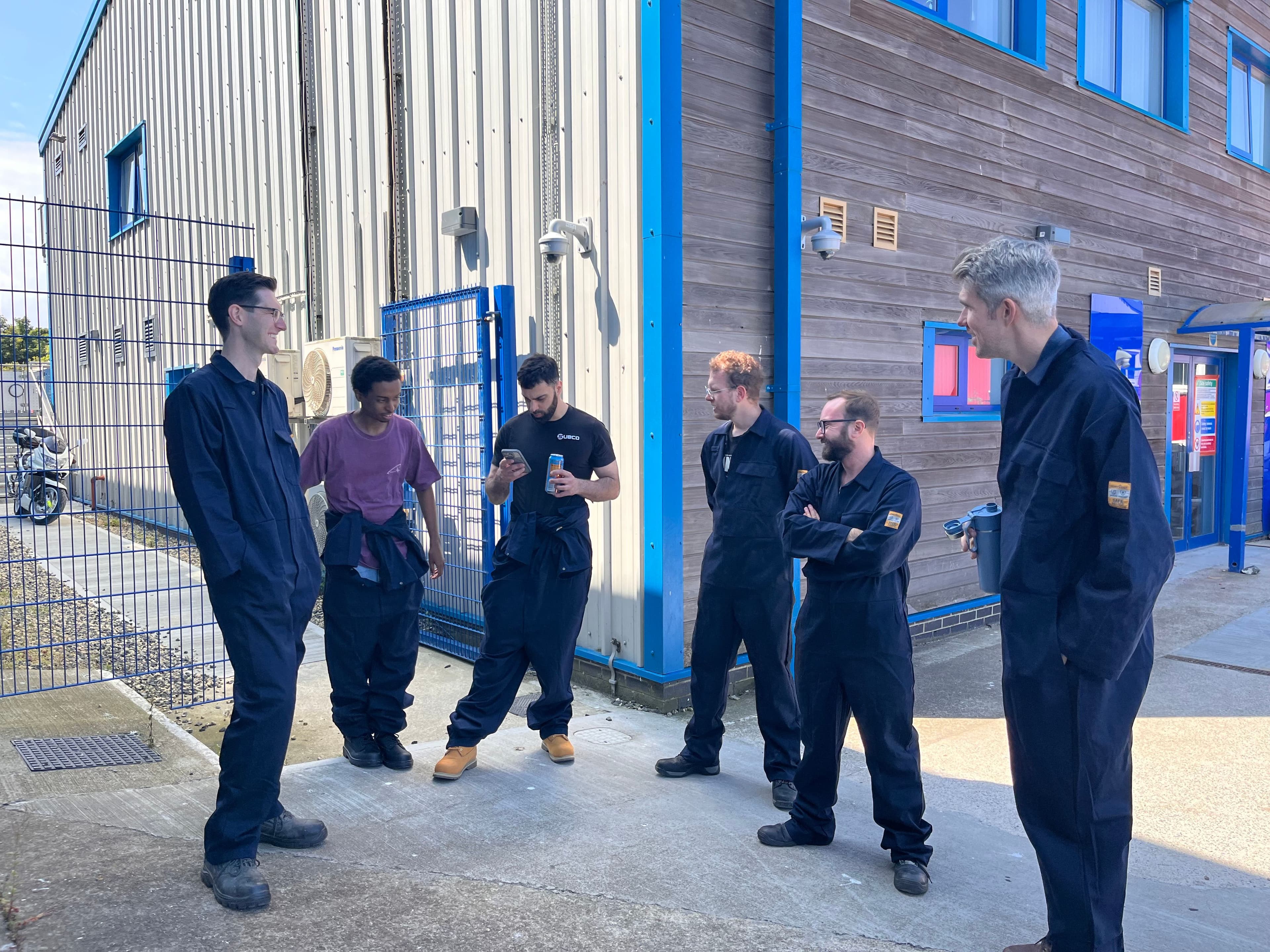
As design engineers we're well aware of the frustration, and sometimes the near impossible welds, that we end up asking of our welders. Poor access for the type of weld we've specified, or no real appreciation for the positions somebody has to hold themselves in to complete an overhead weld, are the sorts of things that look perfectly reasonable on a screen and a lot less reasonable when you're actually stood in front of the joint. We wanted the team to feel that difference rather than just be told about it.
Why this matters to us
At Subco we've got a range of experience levels within the engineering team. Some of our engineers have spent years on site, on the shop floor and in an offshore environment, and they can appreciate how quickly a job grinds to a standstill if a design detail hasn't been properly thought through before it reaches fabrication or installation. We've also got graduates and interns who need these experiences for themselves if they're going to fully appreciate how their design decisions affect the manufacturability of the final item.
That's really the point of a day like this. We sometimes don't get to see the final product we've designed, which is exactly why we place such a high level of importance on getting out and gaining these experiences where we can.
Straight in at the deep end
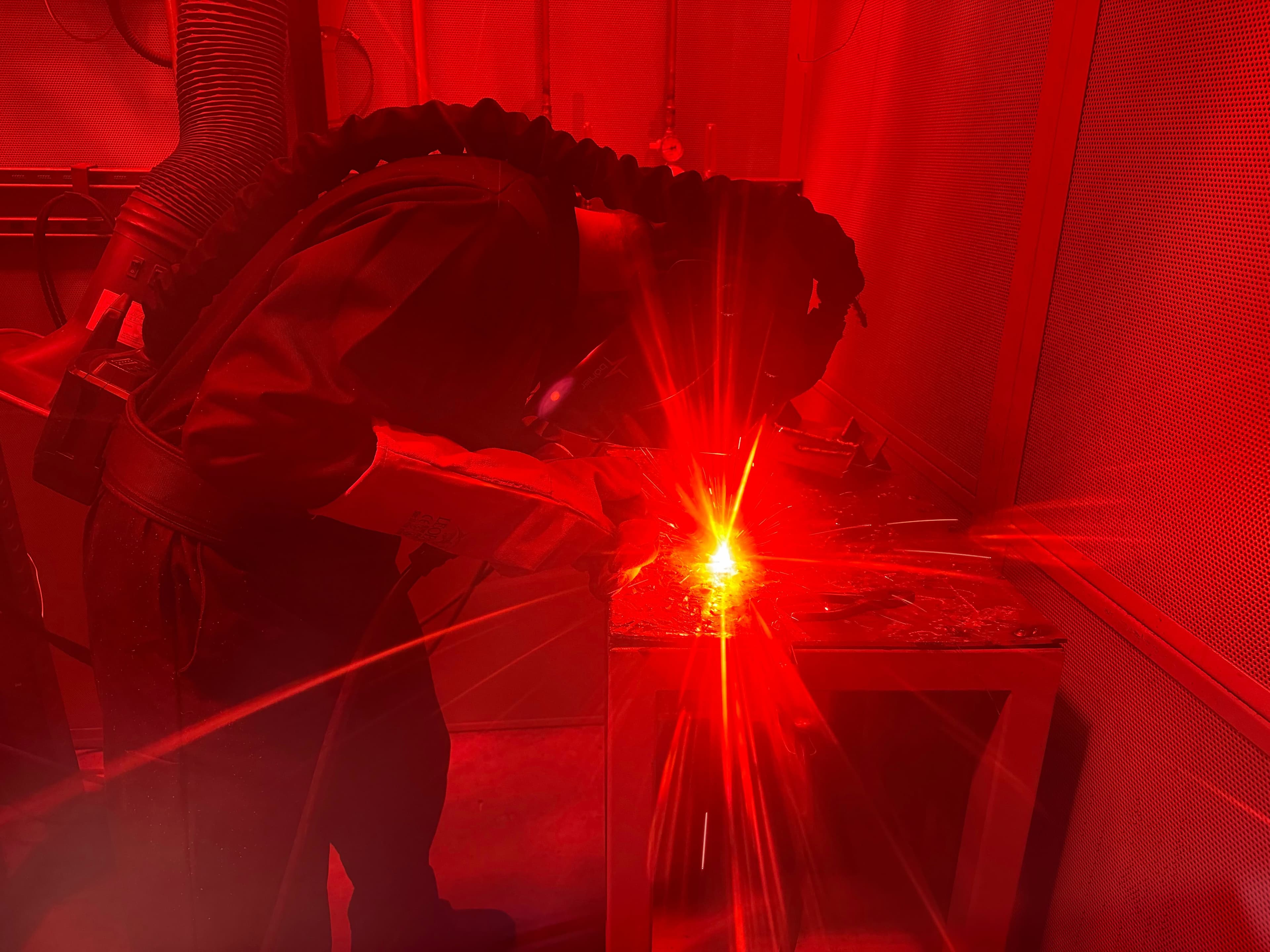
The team dove straight into the practical, MAG welding bits of scrap mild plated steel, and a boat load of problems surfaced pretty much immediately. Our torch angles were off, our travel rates were off, and in some cases even our direction was off. We got spatter and porosity whenever the torch wasn't close enough to the joint or we weren't firing directly into it, and that was only with a single fillet weld in ideal conditions on a bench.
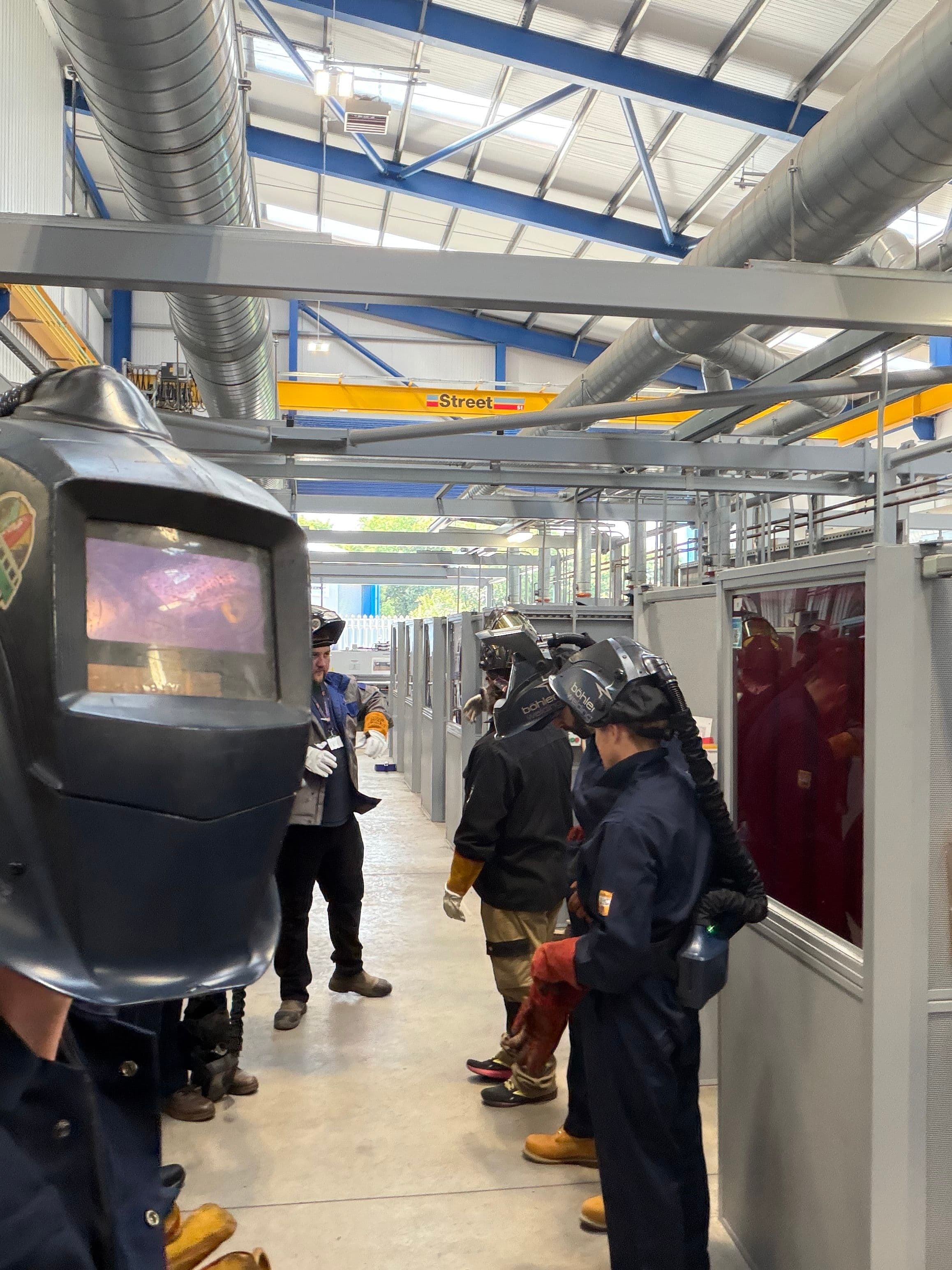
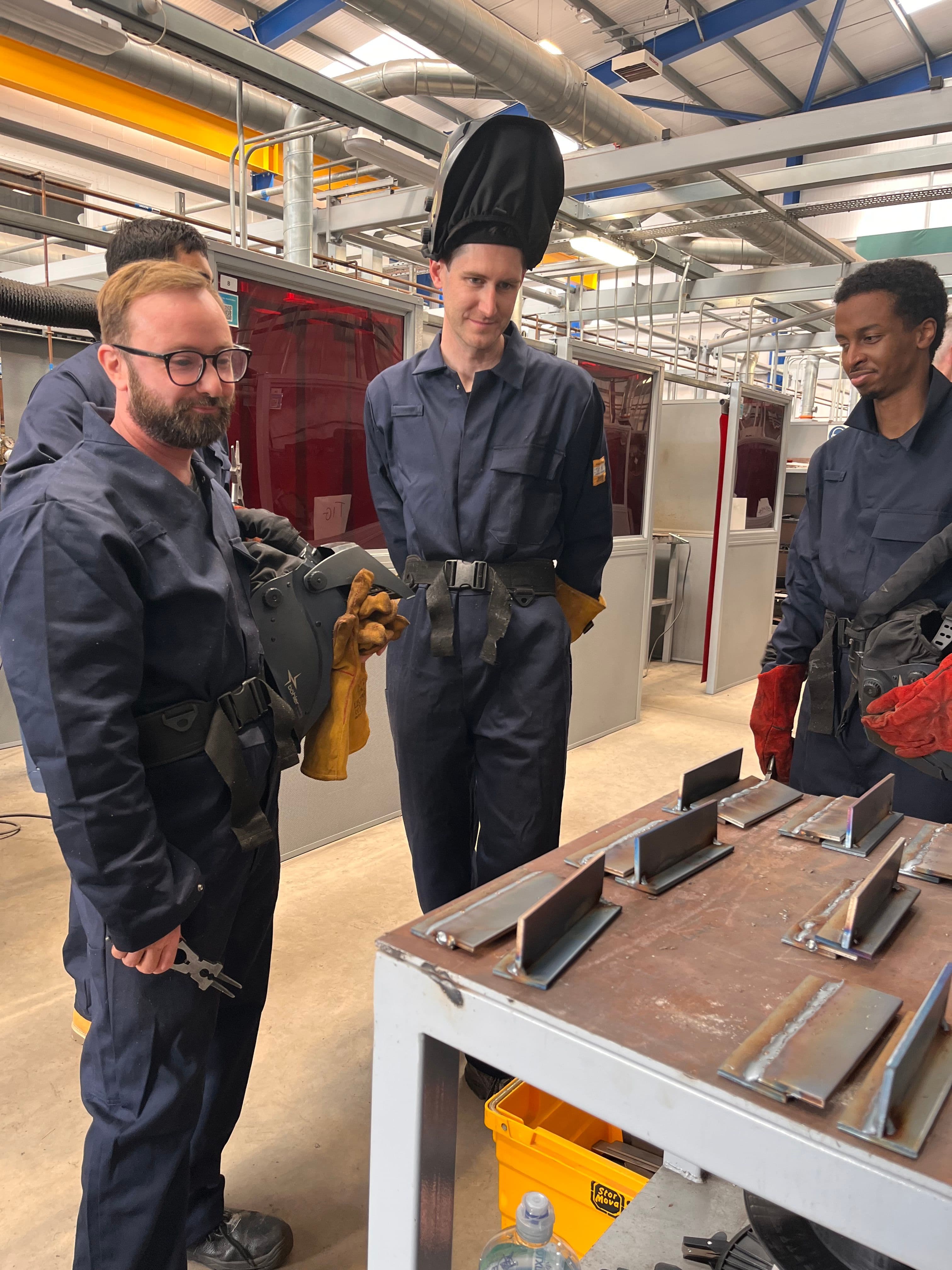
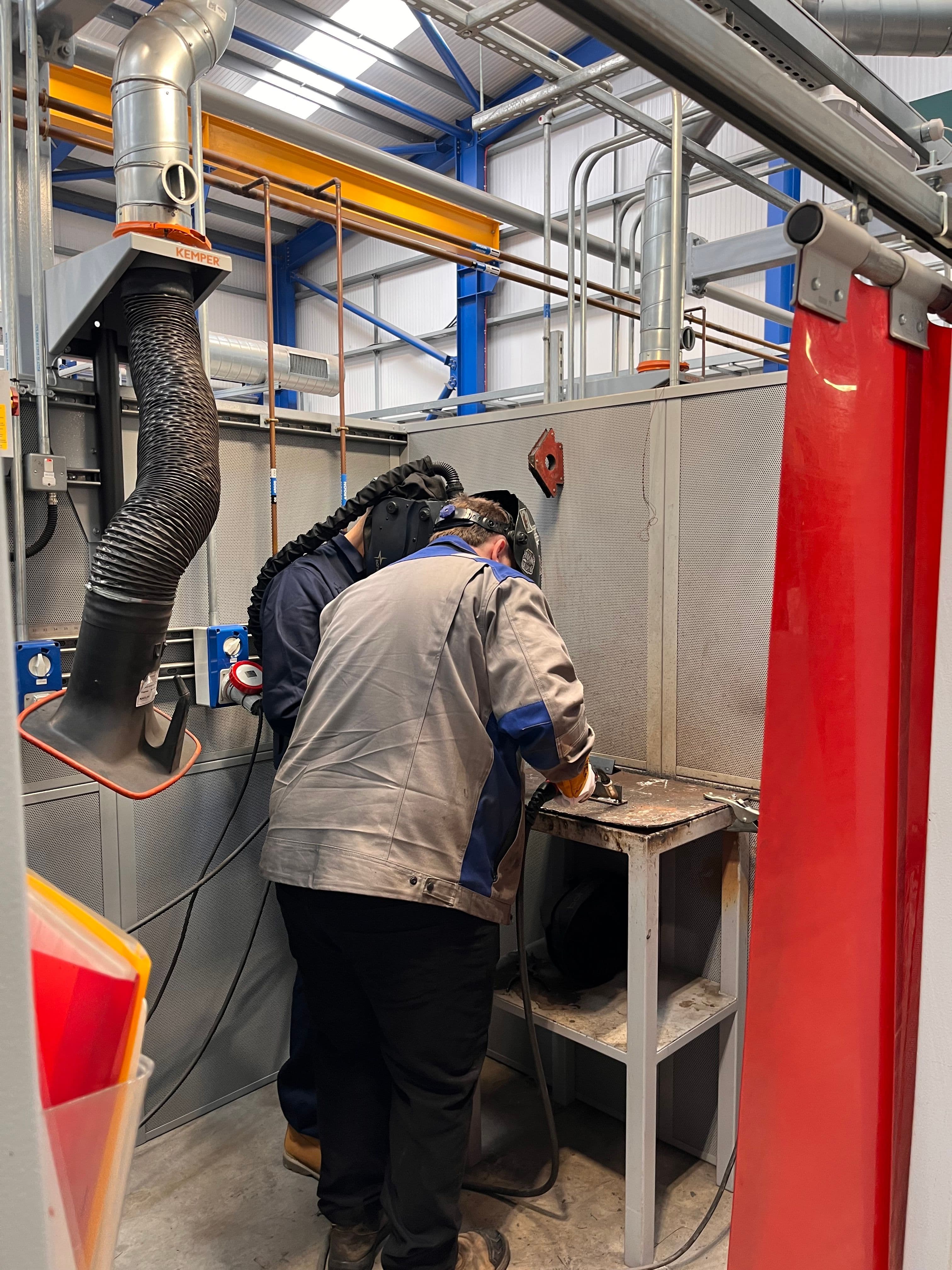
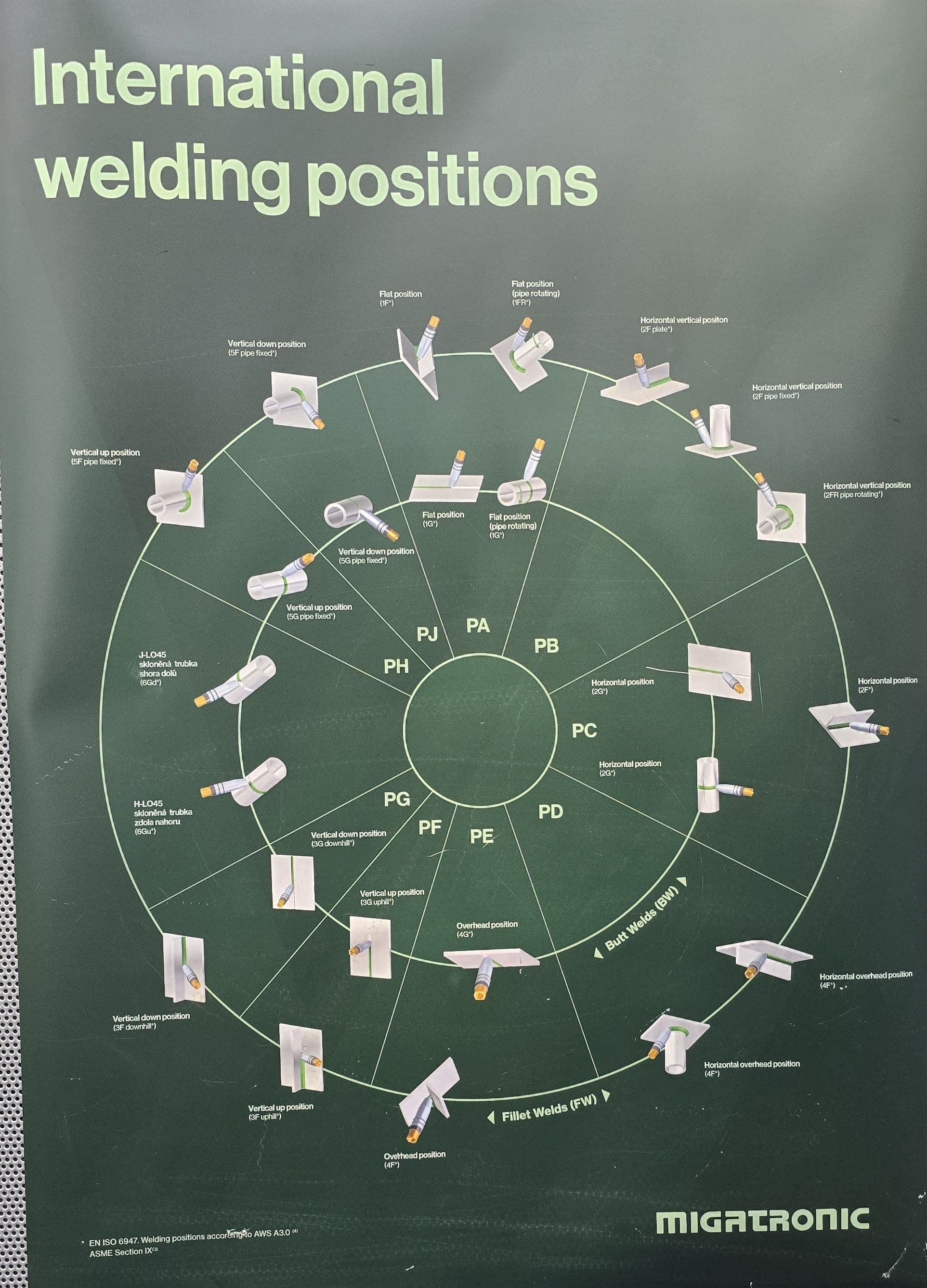
We were then given demonstrations of TIG welding, which genuinely looked beautiful, and stick welding, along with a proper explanation of when and where each method should be used. We also picked up a few things that had passed us by, and here's one for anyone who still specifies welds the way they always have. What most of us grew up calling a 6G weld, the inclined fixed pipe position, is now designated H-L045 in accordance with EN ISO 6947. Worth knowing if you're writing weld positions into a drawing or a procedure, because the old ASME style callouts and the ISO designations aren't interchangeable on paper even when everyone in the workshop knows what you meant.
The instructors also shared a few of their horror stories about the almost impossible positions they've had to work in over the years, including bending a welding rod by 90 degrees just to reach the back of a joint, and one person feeding the TIG consumable whilst the torch was held on the end of a 1m scaff pole to get into a large crevice. We'll not name names though.
And the winner is
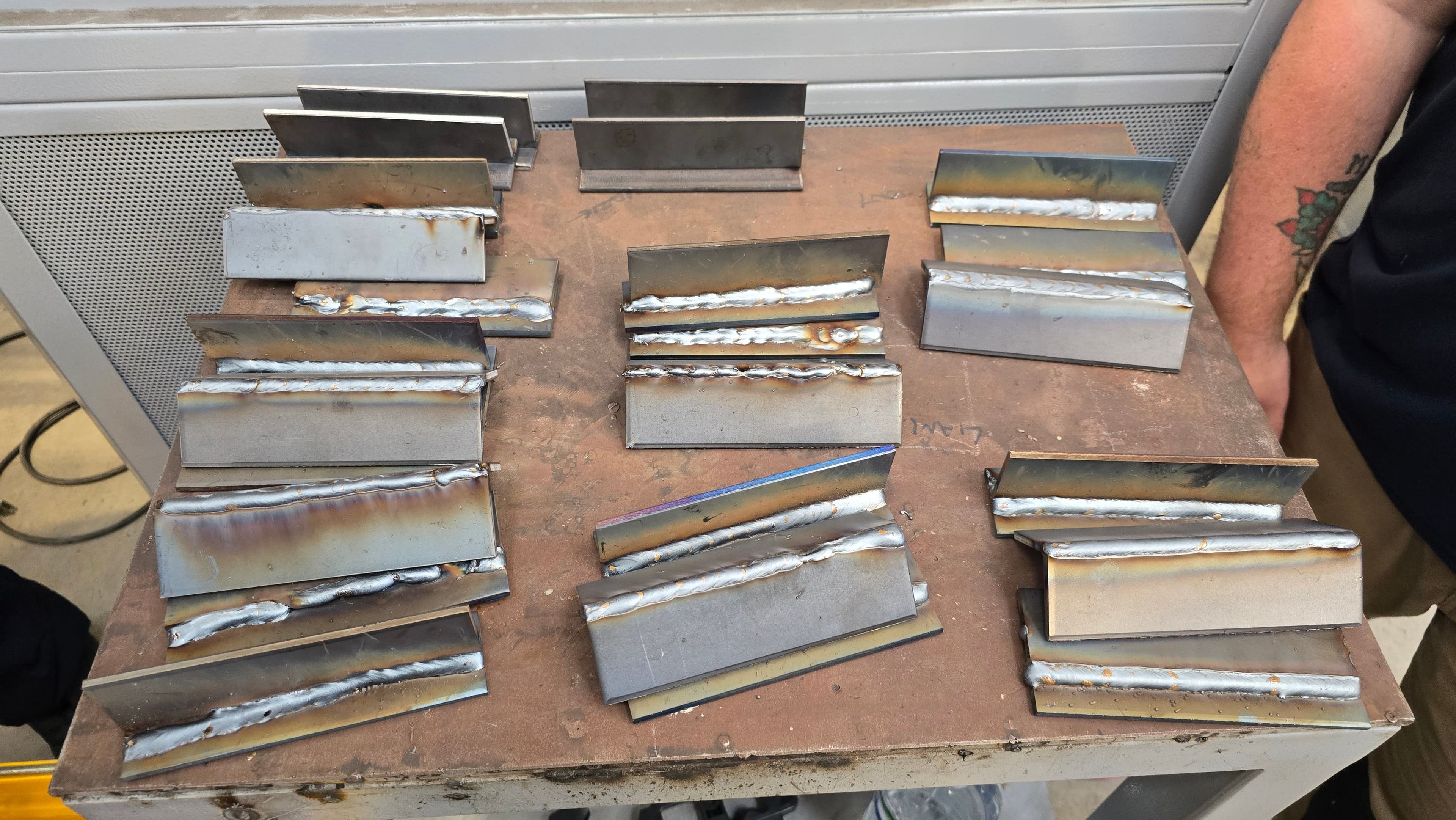
Well done to Matthew, who took the crown, and a 4 pack of beers, for an almost perfect set of fillet, lap joint and corner joint welds. In fairness, when he was fiddling with the voltage and feed rates early on we probably should have realised he'd done this before.
What we're taking away
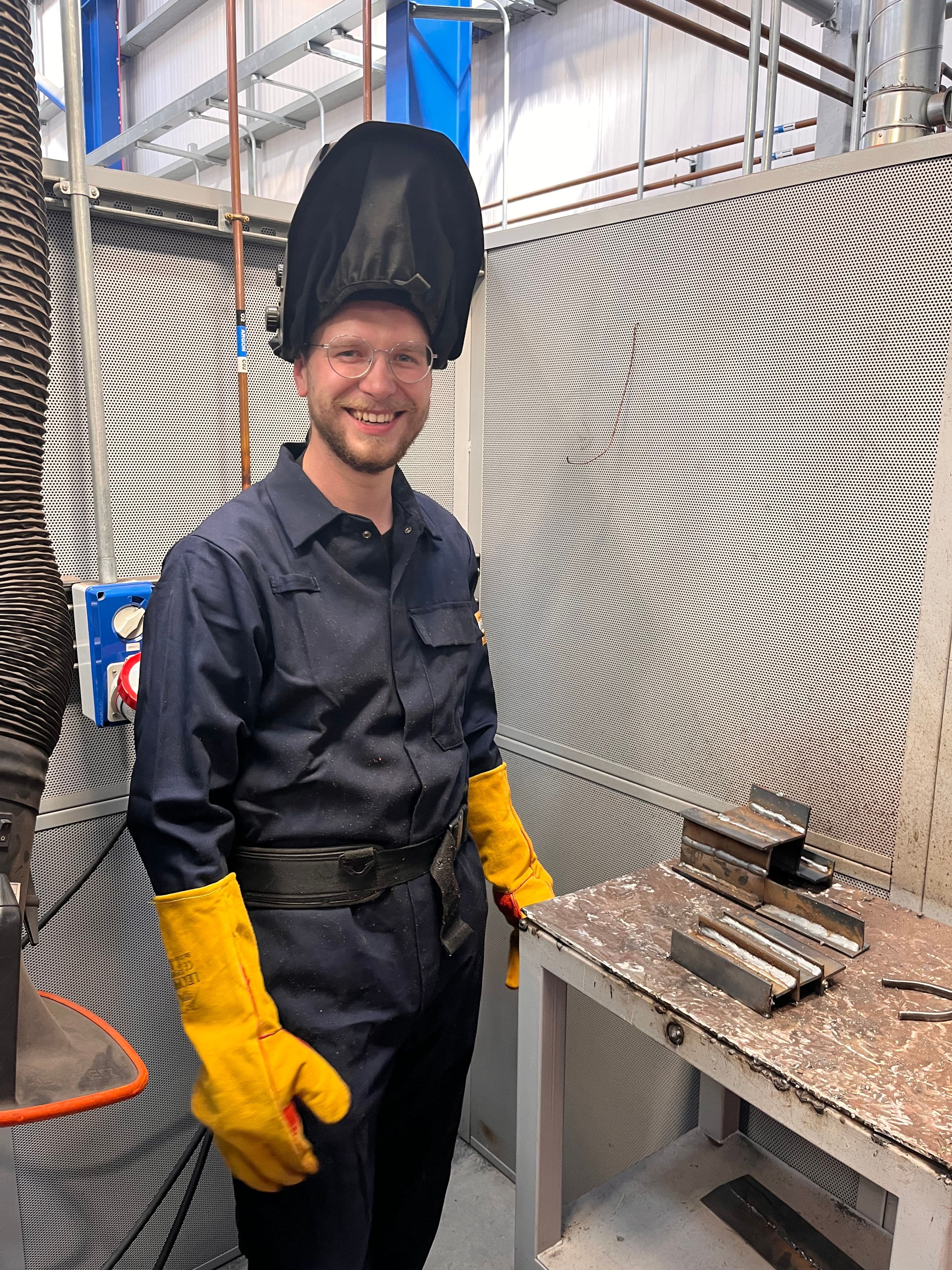
We've all left with a new appreciation for the conditions welders work in and just how difficult some of the jobs we hand over really are, and that will definitely feed into our design process moving forward. Good design isn't just about whether something works once it's built, it's about whether somebody can realistically build it in the first place, and the best way to keep that front of mind is to occasionally pick up the torch yourself.
Thanks to Northumberland Skills and Northumberland County Council for organising the session through the Energy Academy, and to the instructors who put up with our torch angles for the afternoon. The Energy Academy is doing a genuinely valuable job of building the practical skills base this region needs as the offshore energy sector grows around Blyth, and it's well worth a look if you've got a team who would benefit from the same sort of session.
Category:
News
Written by:
Martin Reynolds