Brittle Fracture in Steels
Why some steels turn brittle in the cold and crack without warning, and how ductile-brittle transition temperature testing and good detailing prevent catastrophic failures.

Martin Reynolds
Strategy Director | Engineer
What you will learn
- Understand the ductile-to-brittle transition mechanism in steels
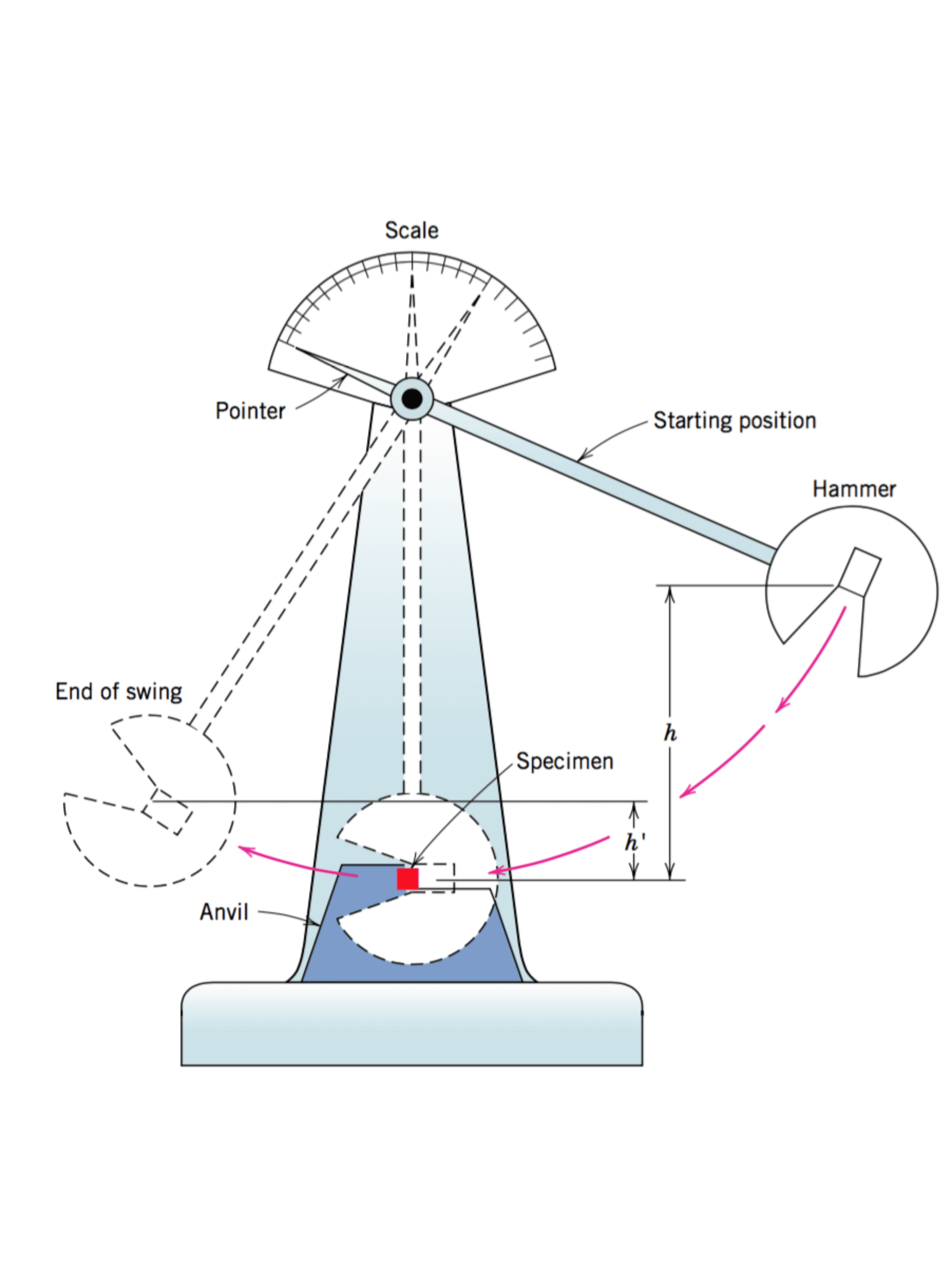
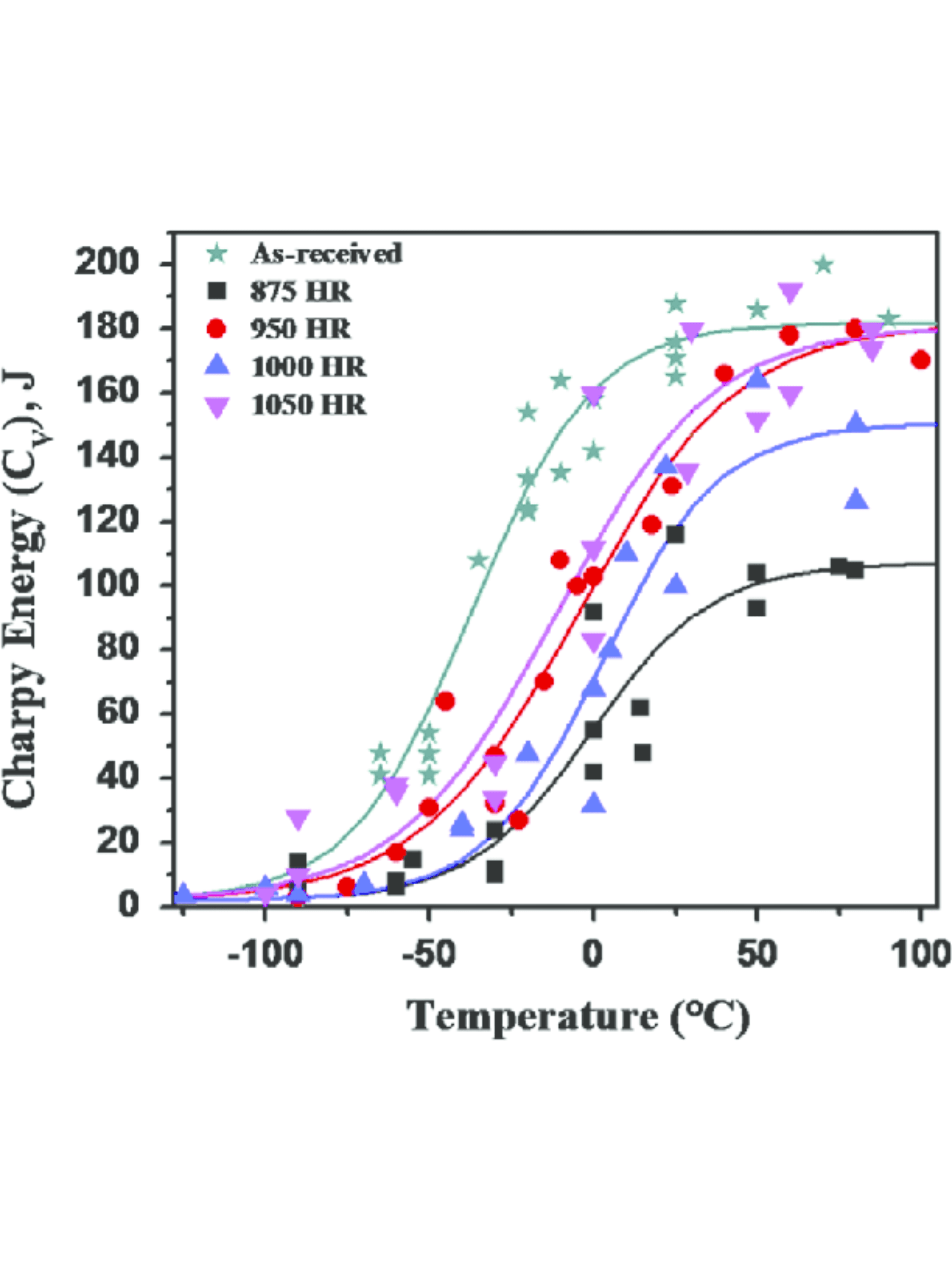
- Interpret Charpy and Izod impact test results at service temperatures
- Recognise the effect of carbon content on low-temperature toughness
- Design details that minimise crack initiation risk
Prerequisites
- Basic understanding of steel properties
- Familiarity with fracture concepts
What is Brittle Fracture?
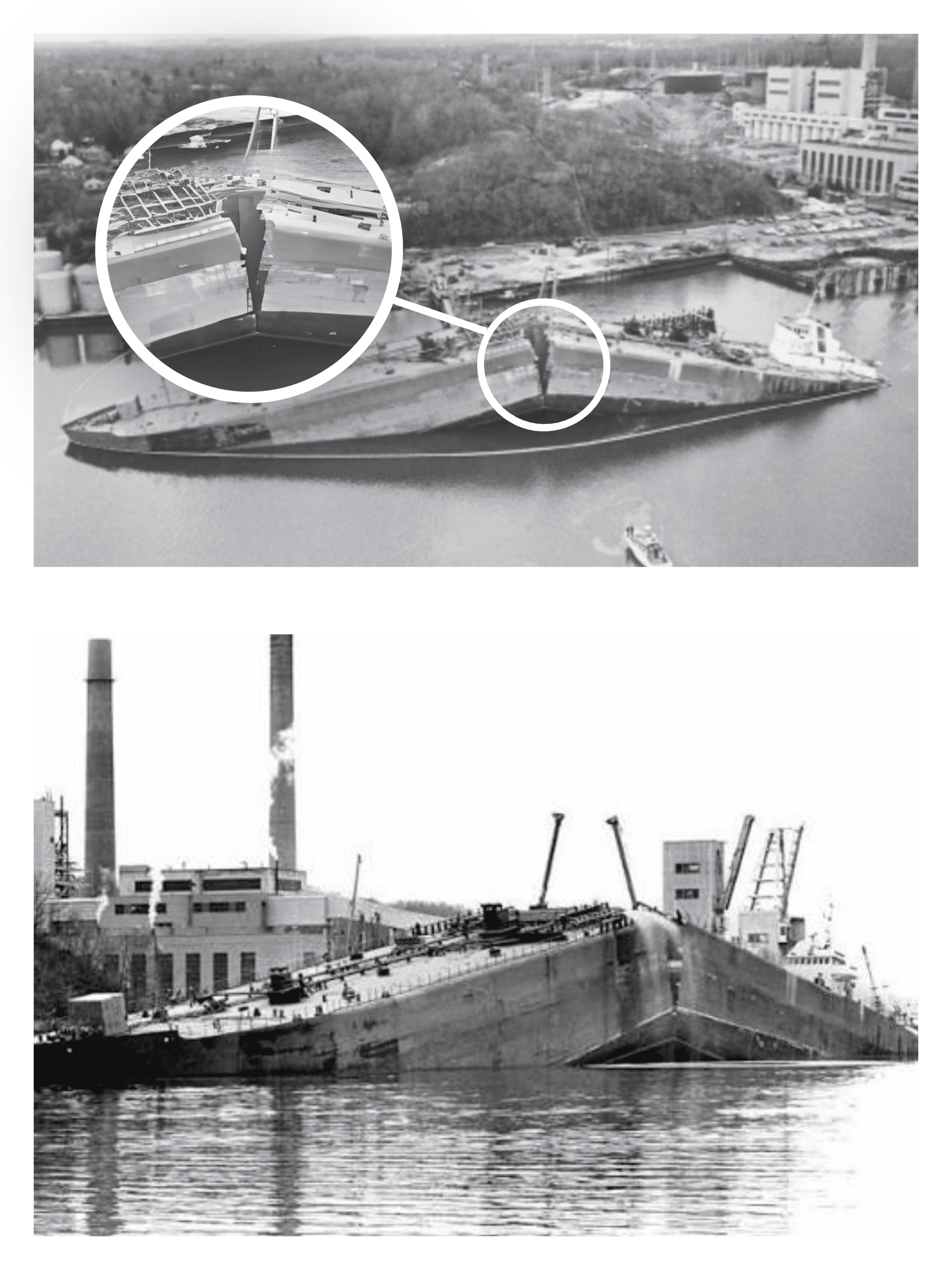
Brittle fracture is when a metal that's normally bendable suddenly turns brittle in the cold and cracks apart without warning.
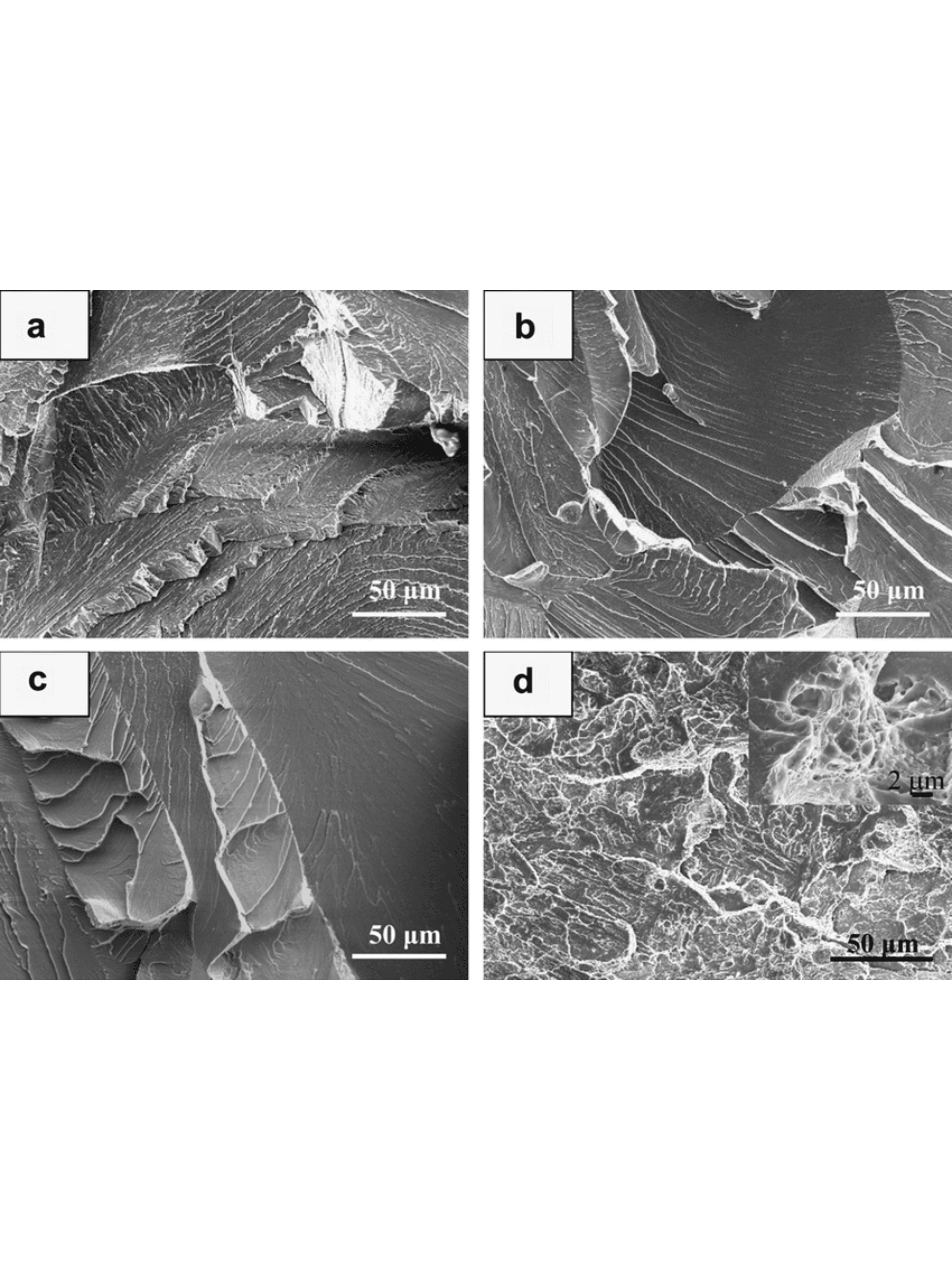
At low temperatures, some steels just lose their ability to bend. So instead of absorbing energy, they just snap. A crack can shoot across meters of steel almost instantly and with catastrophic consequences.
Why Does Steel Become Notch-Sensitive in the Cold?
Most structural steels share a crystal structure that makes them sensitive to cold.
Stainless steel and aluminum mostly don't have this problem.
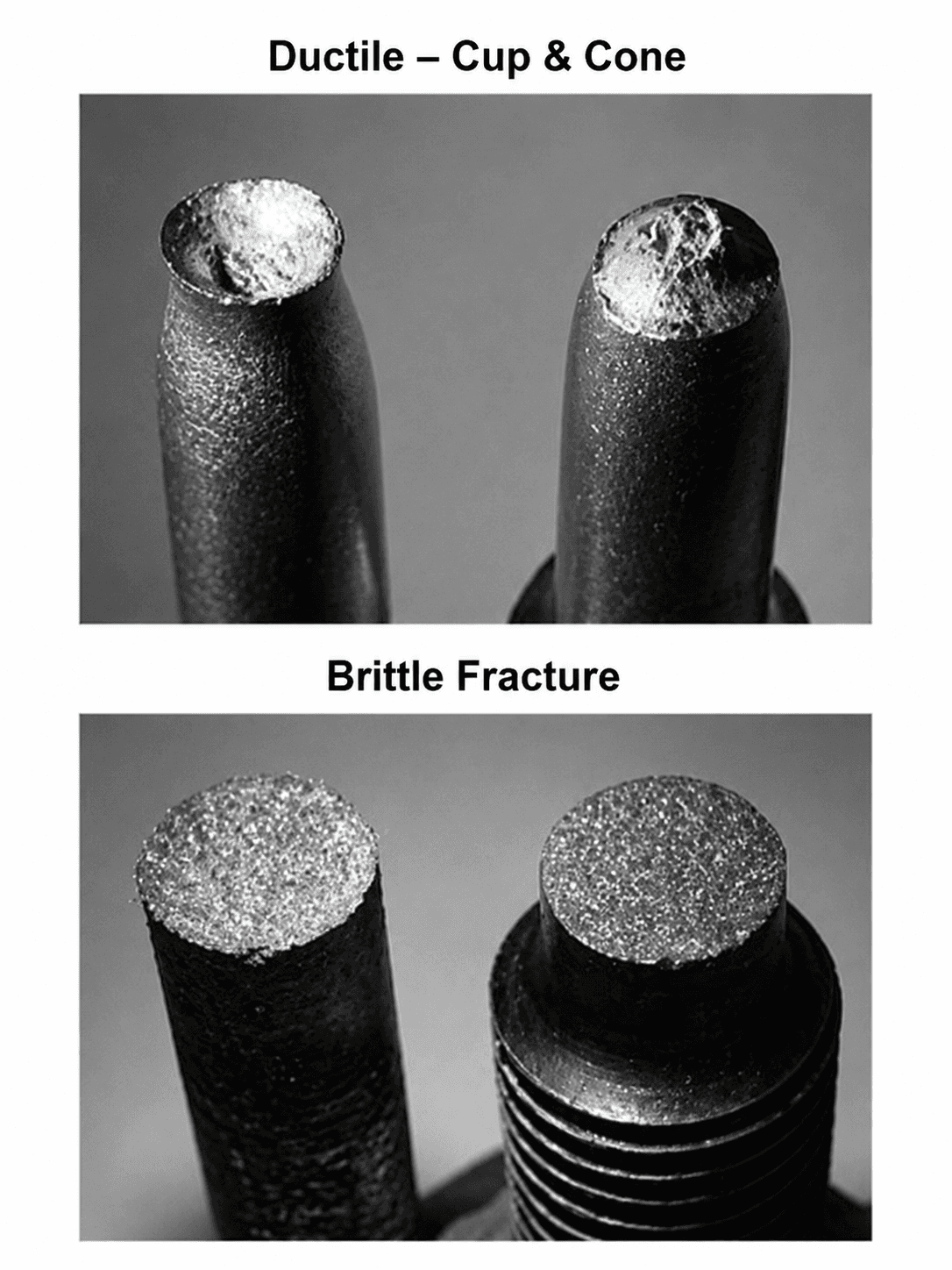
Above a certain temperature, the steel can flex and soak up energy before it fails. Below it, that ability just switches off. Cracks shoot straight through instead, with almost none of the bending or stretching that would normally warn you it's coming.
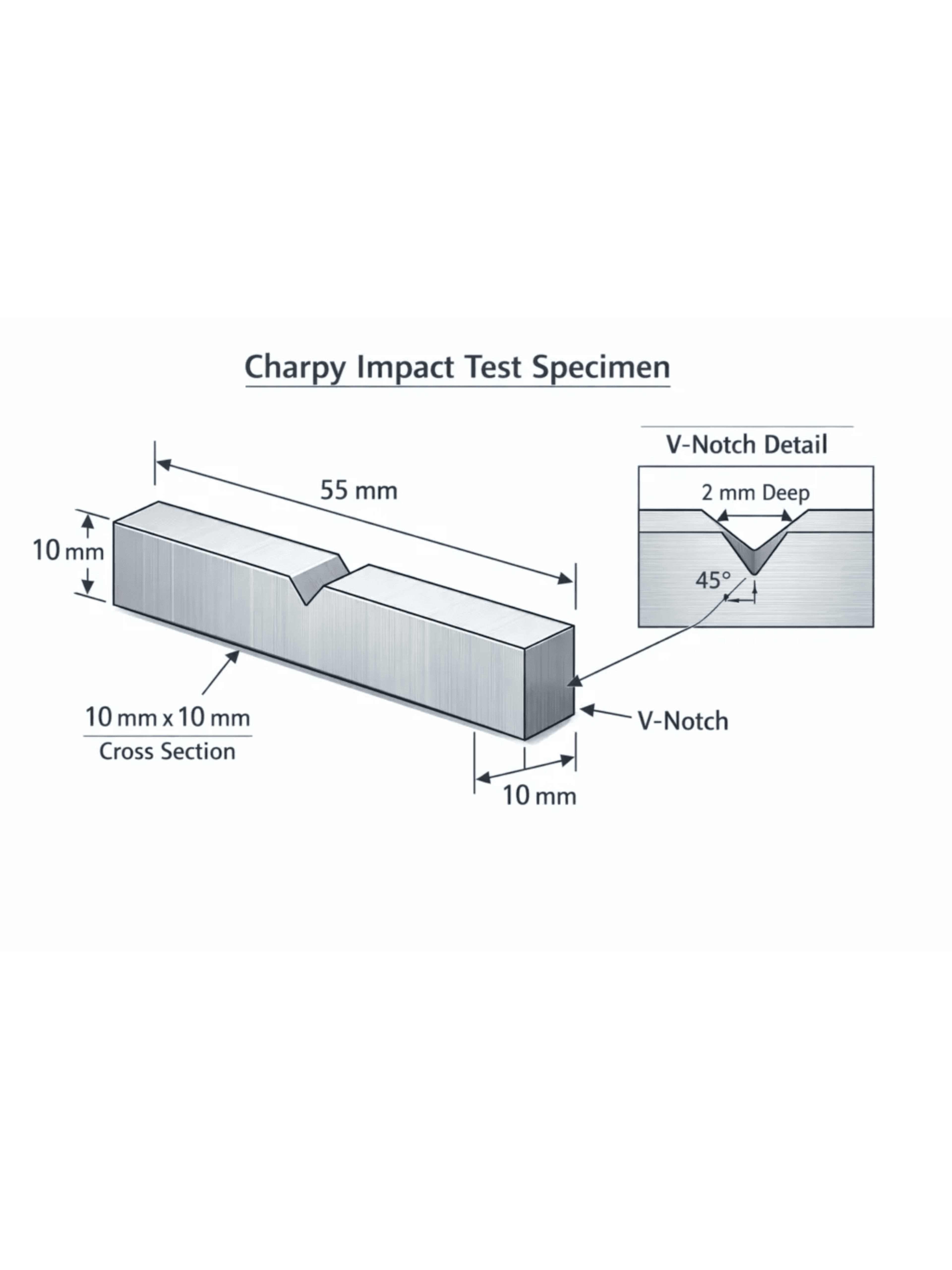
A Charpy or Izod test isn't just a number on a datasheet. It tells you which of those two ways a steel will actually fail at the temperature it'll realistically see in service.
Known Failures: What Brittle Fracture Has Taught Structural Engineering
| Case | What happened & What it taught us |
|---|---|
| SS Schenectady & the Liberty ship fleet, 1943 | The Schenectady cracked clean in two at the dock, in near-freezing water - no warning, no load event, nothing unusual happening at all. Across the wartime Liberty ship fleet, roughly 1,500 brittle fractures were recorded, and at least twelve ships were lost outright. One of them, SS John P. Gaines, took ten lives down with it. The cause: low-toughness steel, welded rather than riveted into an all-welded hull. In a riveted ship, a crack stops at the rivet line. Here, it just kept going - the full length of the ship. This is the failure that gave the industry the DBTT concept and Charpy testing in the first place. Brittle fracture went from a mystery to something you could actually measure. |
| King Street Bridge, Melbourne, 1962 | By 1962, that testing existed. It didn't save King Street Bridge. One welded span collapsed under a legally-loaded lorry - less than fifteen months after opening, on a cold Melbourne winter morning. The cause: cracked welds at doubler plates on the tension flanges. The fabricator wasn't familiar with the high-tensile steel specified, and the welding process introduced hydrogen embrittlement. Knowing the mechanism on paper hadn't reached the welding bay. That gap is what actually reshaped how Australia specified and inspected welding on high-tensile steel. |
| Menai Suspension Bridge, Wales, 2023 | And where a structure predates that testing altogether, the risk doesn't just disappear with time. The Menai Suspension Bridge's hanger sockets were installed during a 1938-41 upgrade, decades before Charpy testing was standard practice on components like these. Nearly a century on, a routine inspection found an "unacceptable risk of brittle failure" in those same sockets, still capable of triggering a progressive collapse of the deck if a single hanger failed brittle. The lesson compounds on the first two: the risk doesn't retire with the structure. It has to be actively assessed, not assumed resolved. |
So how do we guard against it?
A steel that looks identical at 20°C and at -20°C can behave like two completely different materials.
| Approach | Why it works |
|---|---|
| Confirm the ductile-to-brittle transition temperature (DBTT) | Establishes the point below which the steel loses ductility |
| Review Charpy or Izod impact values at service temperature | Confirms toughness at the temperatures the part will actually see |
| Account for carbon content | Higher carbon content generally lowers toughness in the cold |
| Avoid sharp notches and poor weld profiles | Removes the starting points a crack needs to initiate |
Detecting It on a Structure That's Already in Service
Everything above is about specifying and testing new steel at the design stage.
Most of what needs checking today isn't new steel, though. It's stuff that's already been in service for decades - and a Charpy test never taken from the real structure won't tell you much about it now.
- On-site inspection combines a visual check with ultrasonic thickness gauging, catching section loss and internal flaws a visual check alone would miss.
- Where drawings or certificates don't exist (common on older assets), steel grade and toughness has to be worked out from hardness testing or a sample, not assumed from a spec nobody can find.
- Point cloud data can flag geometric changes, past repairs, or stress points that built up over the asset's life, things that shift the real risk picture beyond what the original design ever assumed.
The output usually isn't a fresh lab result for a forty-year-old crane or bridge. It's a structural assessment against today's governing standard, built on the best evidence of the material's actual condition, not its original paperwork.
Frequently Asked Questions
Does brittle fracture happen without any warning signs?
Yes, that is what makes it dangerous. There is no visible deformation beforehand, the way there would be with a ductile failure.
What is the ductile-to-brittle transition temperature?
It is the temperature below which a steel's fracture behaviour switches from ductile to brittle. Below that point, toughness drops steeply.
Can brittle fracture be predicted before it happens?
Yes, through impact testing (Charpy or Izod) at the relevant service temperature, checked against the material's DBTT.
Does brittle fracture only affect old or low-quality steel?
No. Age and steel grade both matter, but modern steel can still behave brittle below its own transition temperature if the wrong grade is specified for the service conditions, or if a detail concentrates stress at a notch or a weld toe. The Menai Bridge case shows the risk doesn't disappear just because a structure is well-built. It has to be assessed against the temperatures and details it's actually exposed to.
What makes one steel grade less prone to brittle fracture than another?
Fine grain size, lower carbon content, and controlled deoxidation practice all lower the transition temperature. That's why structural steel specifications include impact-tested subgrades, J0, J2 and K2 in EN 10025 for example, each guaranteeing a minimum Charpy value at a stated test temperature rather than leaving toughness to chance.
Is brittle fracture something to consider for offshore or portside structures specifically?
Yes, more than most. Steel exposed to open marine conditions sees genuinely low winter temperatures and thermal cycling that inland structures don't, on top of dynamic loading from berthing, lifting or wave action. A structural assessment of an ageing crane, jetty or platform should check the governing steel grade's toughness against the coldest realistic service temperature, not just its static strength.
How is brittle fracture risk detected on a structure that's already built, rather than at the design stage?
Through a combination of on-site survey, ultrasonic thickness gauging to catch section loss and internal flaws, and, where drawings don't survive, inferring the actual steel grade from hardness testing or a representative sample. The result feeds a structural assessment against the current governing standard, rather than a lab test result you'd get from cutting a fresh coupon out of someone's crane.