Galvanic Corrosion in Dissimilar Metal Joints
Pairing dissimilar metals can accelerate corrosion... Find out why, and also our professional take on the design choices that prevent it.

Martin Reynolds
Strategy Director | Engineer
What you will learn
- Understand the electrochemical mechanism behind galvanic corrosion
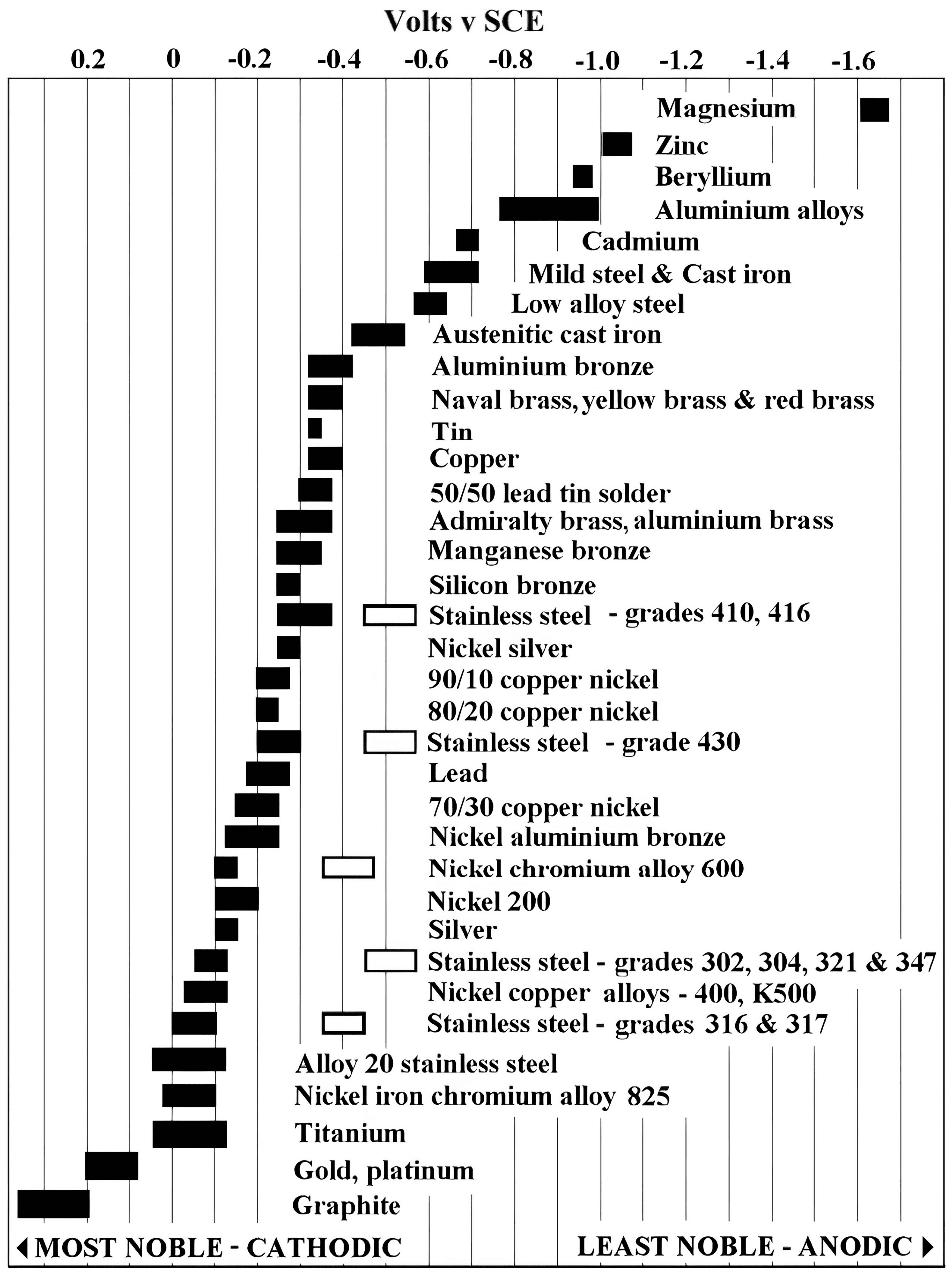
- Use the galvanic series to assess pairing risk
- Apply electrical isolation techniques at joints and fasteners
- Account for cathode-to-anode area ratio in design
Prerequisites
- Basic understanding of corrosion mechanisms
What is Galvanic Corrosion?
Galvanic corrosion is when two different metals touch and cause one of them to corrode a lot faster than it normally would on its own.
When dissimilar metals are electrically connected in the presence of an electrolyte, the less noble metal sacrifices itself in an attempt to protect the more noble one, corroding a lot faster than it normally would alone.
It is pretty easy to miss at the design stages and pretty expensive too once it shows up in service.
So Why Does Pairing Two Metals Cause Accelerated Corrosion?
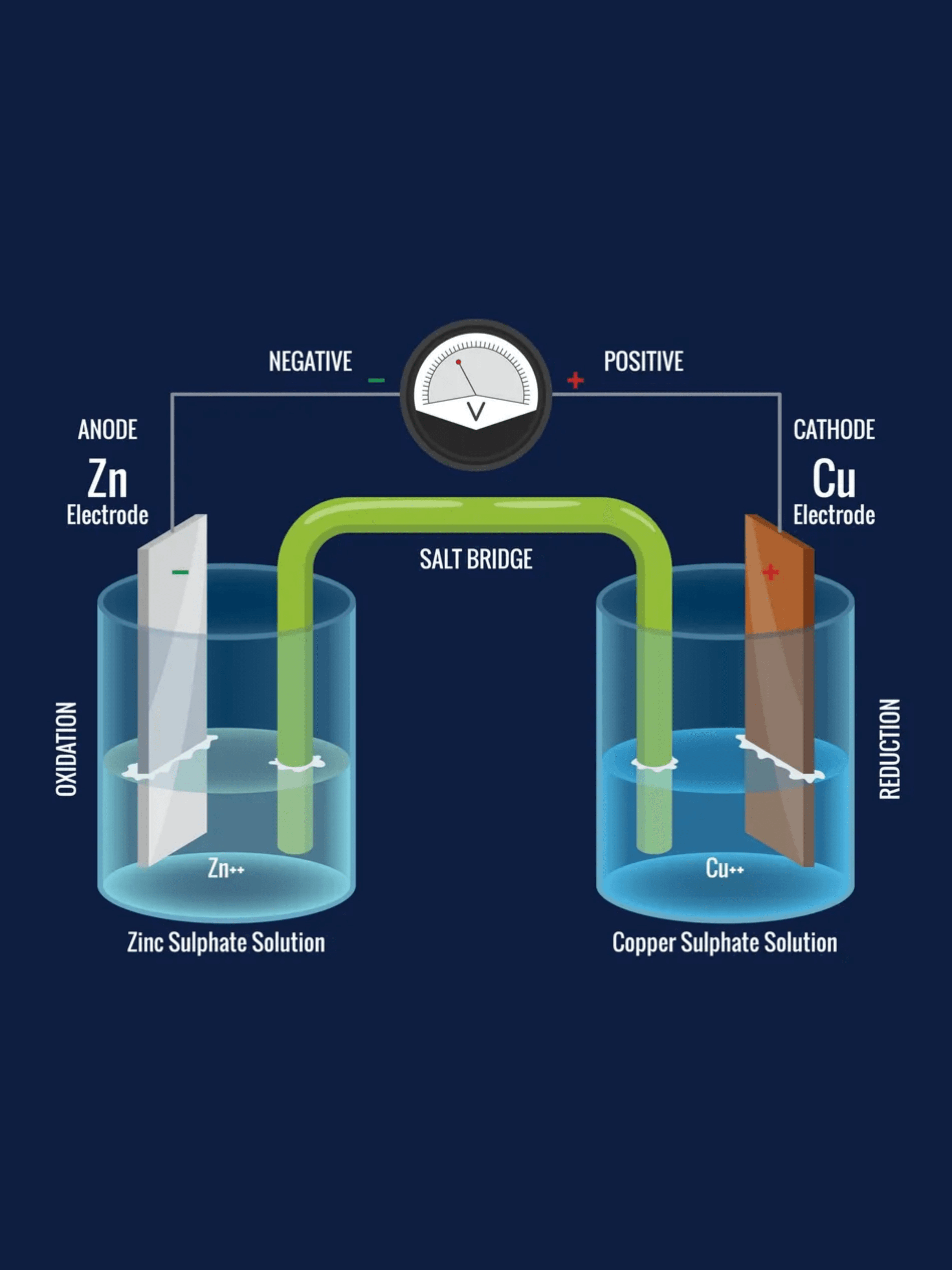
A galvanic couple is really just a battery that nobody wanted.
Two metals with different electrode potentials, an electrical path between them, and an electrolyte to carry ions between the two… that's all it takes!
The less noble metal becomes the anode: it gives up electrons and corrodes away.
The more noble metal becomes the cathode: it stays protected, barely touched.
Now how aggressive that reaction turns out, really depends completely on just two things which is what the engineers control:
- How far apart the two metals sit on the galvanic series.
- How conductive that electrolyte bridging them is.
A splash of rainwater is a comparatively pretty weak electrolyte.
Seawater, loaded with dissolved salts, conducts way better, which is exactly why the same metal pairing that's stable in a dry, indoor environment can fail within a few years on a jetty or offshore structure.
Known Failures:
What Galvanic Corrosion Has Taught Structural Engineers
| Case | What happened & What it taught us |
|---|---|
| Statue of Liberty, 1886-1986 | Did you know the Statue of Liberty's copper skin and iron armature were already a galvanic couple from day one? Gustave Eiffel's team saw it coming even back in the 1880s, so they’d inserted a shellac-soaked asbestos layer to break that contact. That barrier degraded over the following century, and by the 1980 inspections roughly two-thirds of the statue's 1,800 iron armature bars were so badly corroded, that they had no choice but to execute the 1984-86 restoration project, replacing 10,000 linear feet of it with a properly isolated corrosion-resistant alloy. |
| F/A-18 Hornet wing fasteners, ongoing | Even the F/A-18 Hornet's wing fasteners weren't immune. The carbon fibre skin sits electrochemically close to the noble metals, and almost every fastener hole on those wings had shown galvanic corrosion by the depot overhaul. The standard fix is a stainless steel bushing, but that just solved the visible damage while making the underlying electrochemistry worse, so corrosion around the new bushings was actually reported worse at those next depot visits. |
| Aluminium-stainless steel bolted joints, offshore, ongoing | In the offshore industry, you're actually seeing this everyday - aluminium components bolted to stainless steel for strength or convenience, right across ports and platforms. Testing found aluminium weight loss roughly six times higher in these joints than in equivalent aluminium-only joints. NACE International puts the global cost across oil, gas and maritime transport in the hundreds of billions a year. |


So Then How Do You Prevent It?
| Approach | Why it works |
|---|---|
| Check the galvanic series before pairing any two metals | Identifies which combinations are the higher risk ones before they are specified |
| Electrically isolate dissimilar metals | Coatings, gaskets or insulating washers break the electrical connection |
| Use sacrificial anodes | Gives corrosion somewhere else to happen that won’t compromise the structure itself |
| Mind the area ratio | A smaller anode next to a larger cathode will corrode disproportionately fast |

Detecting Galvanic Corrosion in a Structure Already in Service
Everything above is about avoiding the wrong pairing at the design stage.
For assets already in service, there's nothing really new to design. It's already bolted together, coated, and running.
So the job now is just to check what's quietly degrading.
- Visual inspection: a white or grey corrosion halo concentrated around a fastener is the clearest sign of a galvanic couple.
- Reference electrode potential mapping picks up active galvanic cells before they produce enough visible corrosion.
- Ultrasonic thickness gauging tracks actual metal loss at and around joints over time.
- Isolation and coating checks confirm the gaskets, washers, and coatings specified to break the electrical path haven't degraded with age or wear.
- Cathodic protection review (NACE SP0176 / ISO 15589) confirms sacrificial anodes or impressed current systems are still adequate as the structure ages.
Frequently Asked Questions
Does galvanic corrosion only happen in seawater?
No, any electrolyte works, including rainwater or even condensation. Marine environments with large volumes of seawater do accelerate it significantly.
Can two similar metals still cause galvanic corrosion?
Only if they sit far enough apart on the galvanic series. Genuinely similar alloys will not usually cause a meaningful effect.
What is the cheapest way to prevent galvanic corrosion in a new design?
Isolating the metals electrically. A coating, gasket, or washer is usually far cheaper than dealing with corrosion damage later.
What is the galvanic series and how is it used?
It's a ranked list of metals and alloys by their electrochemical potential in a given electrolyte, usually seawater. Two metals close together on the list are a low-risk pairing. Metals far apart are a high-risk one, and the further apart they sit, the faster the less noble metal will corrode.
Why does area ratio matter more than which two metals are paired?
Because the total corrosion current a couple generates gets concentrated wherever the anode's surface area is smallest. A high-risk metal pairing with a large anode can be more manageable than a lower-risk pairing squeezed onto a small one — the geometry of the joint matters as much as the materials chosen.
Can galvanic corrosion be completely eliminated, or only managed?
In practice, managed. Two dissimilar metals will always form some potential difference in an electrolyte. The goal isn't zero current, it's keeping that current low enough, or diverted somewhere sacrificial, that it doesn't compromise the structure within its intended service life.
Is galvanic corrosion a concern for buried or subsea pipelines specifically?
Yes, particularly at flanges, valves, and any point where dissimilar metals or fittings are introduced into an otherwise uniform pipeline run. It's one of the reasons cathodic protection systems and isolation joints are standard on buried and subsea pipework.