Hydrogen Embrittlement in High Strength Steels
How hydrogen atoms infiltrate steel's crystal lattice to cause sudden brittle failure, and the design and fabrication practices that prevent it in high strength fasteners and components.

Martin Reynolds
Strategy Director | Engineer
What you will learn
- Understand how hydrogen enters the crystal lattice and weakens atomic bonds
- Identify components and grades most susceptible to hydrogen embrittlement
- Know when to specify lower strength grades to reduce susceptibility
- Apply bake-out procedures after plating or welding
Prerequisites
- Basic knowledge of steel grades and strength classes
- Familiarity with fastener specifications
What is Hydrogen Embrittlement?
Hydrogen embrittlement is when a tiny amount of hydrogen sneaks into a metal and makes it suddenly snap, even though everything appeared fine.
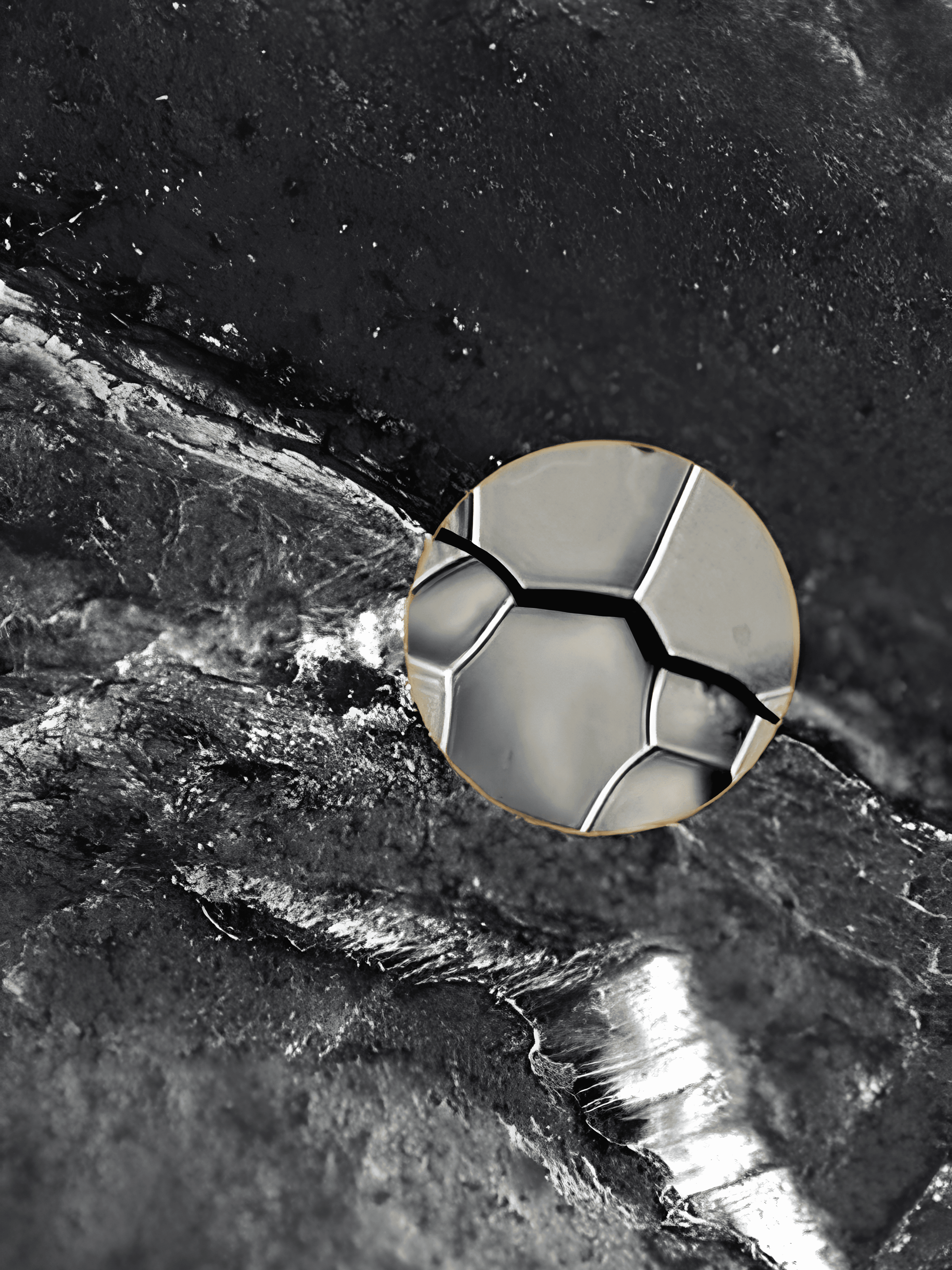
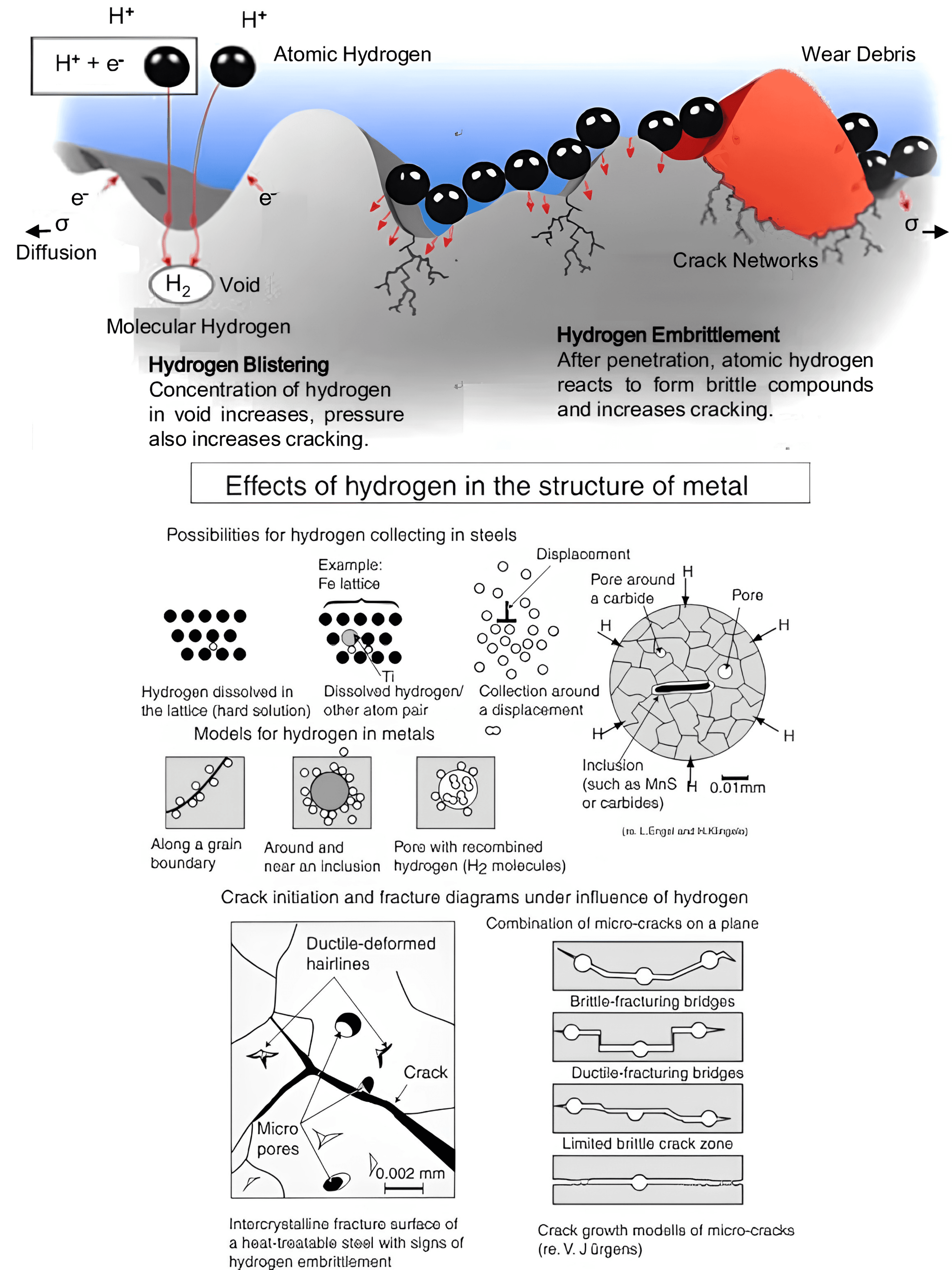
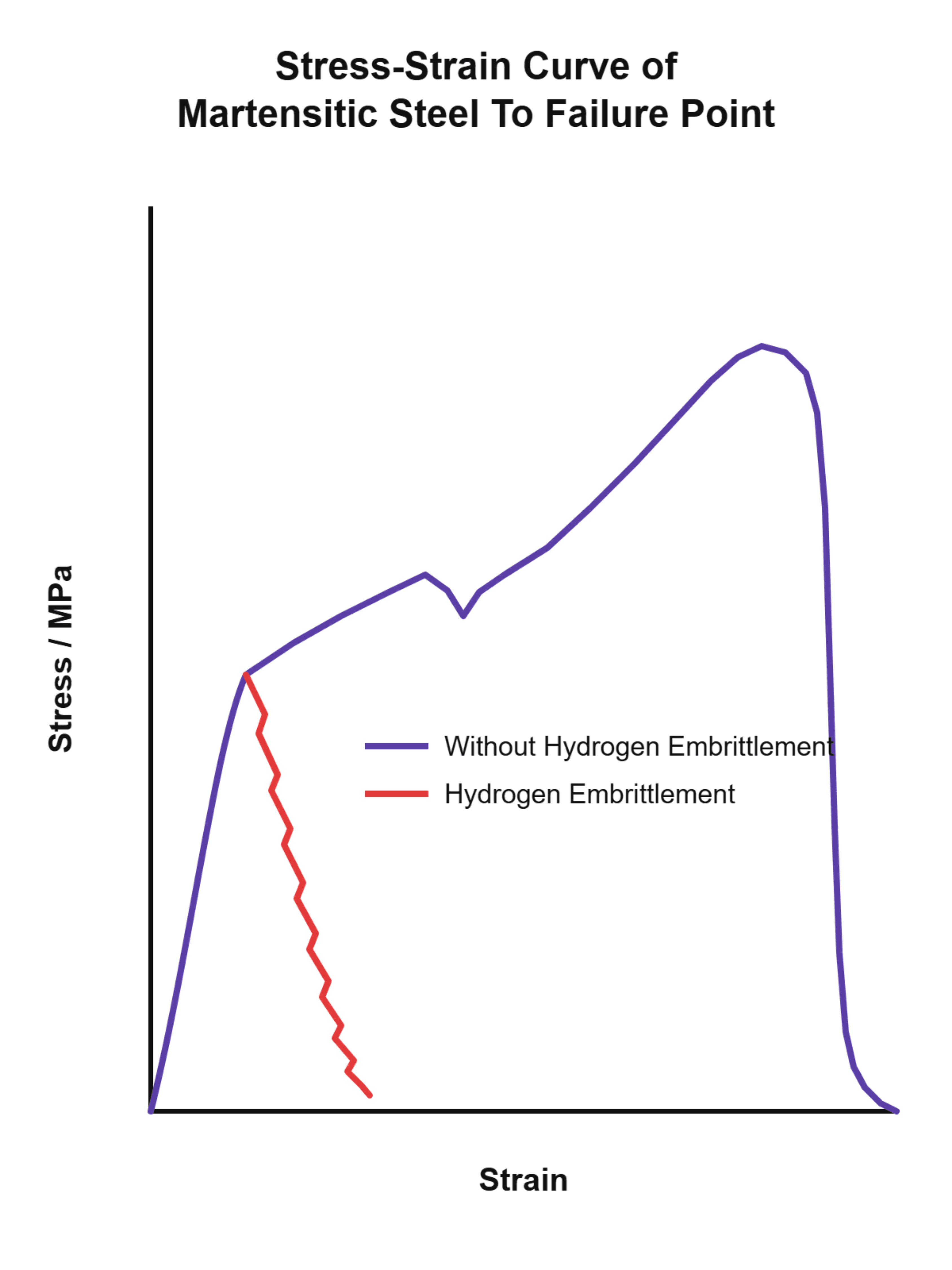
A single hydrogen atom is so small that it can slip into the steel's crystal lattice. And once inside, it weakens atomic bonds and allows cracks to propagate at stresses well below the material's yield strength.
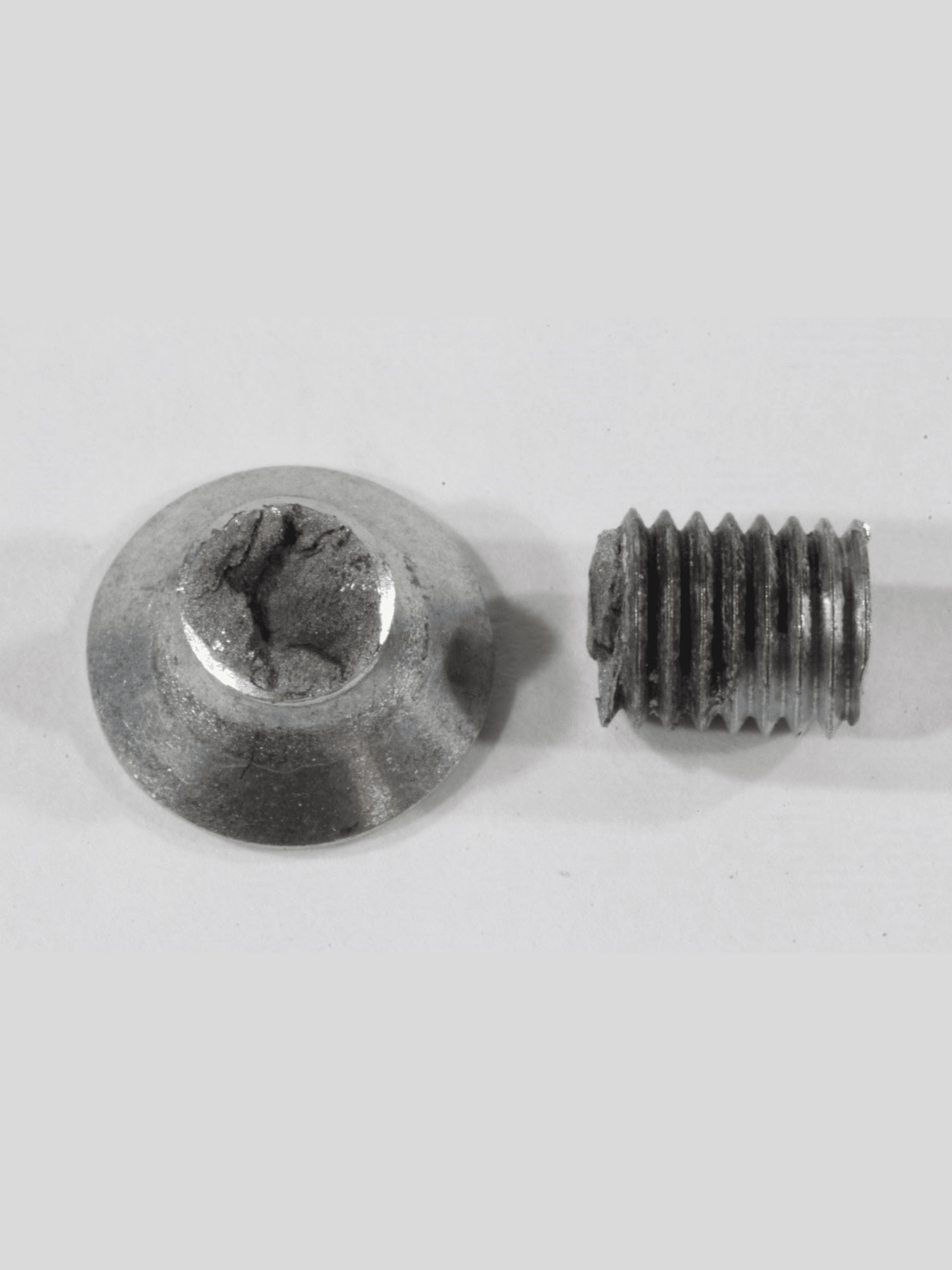
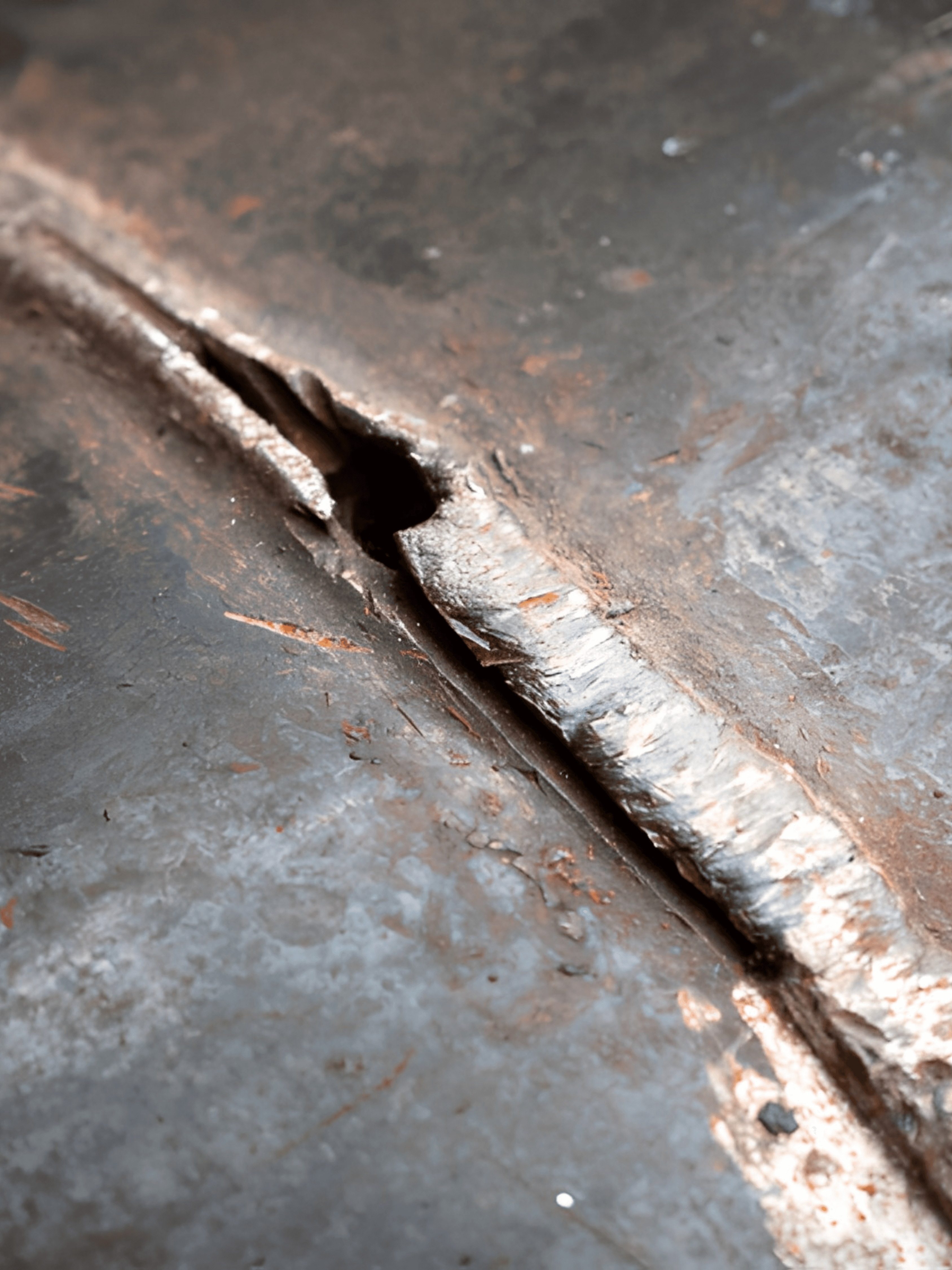
And this effect targets the exact parts engineers rely on the most: high strength fasteners, plated components, pipelines, and pressure vessels. The failures are sudden with little to no visual warning beforehand.
Why Does Hydrogen Make Steel Suddenly Fail?
Hydrogen is the smallest atom there is, and that's the whole problem.
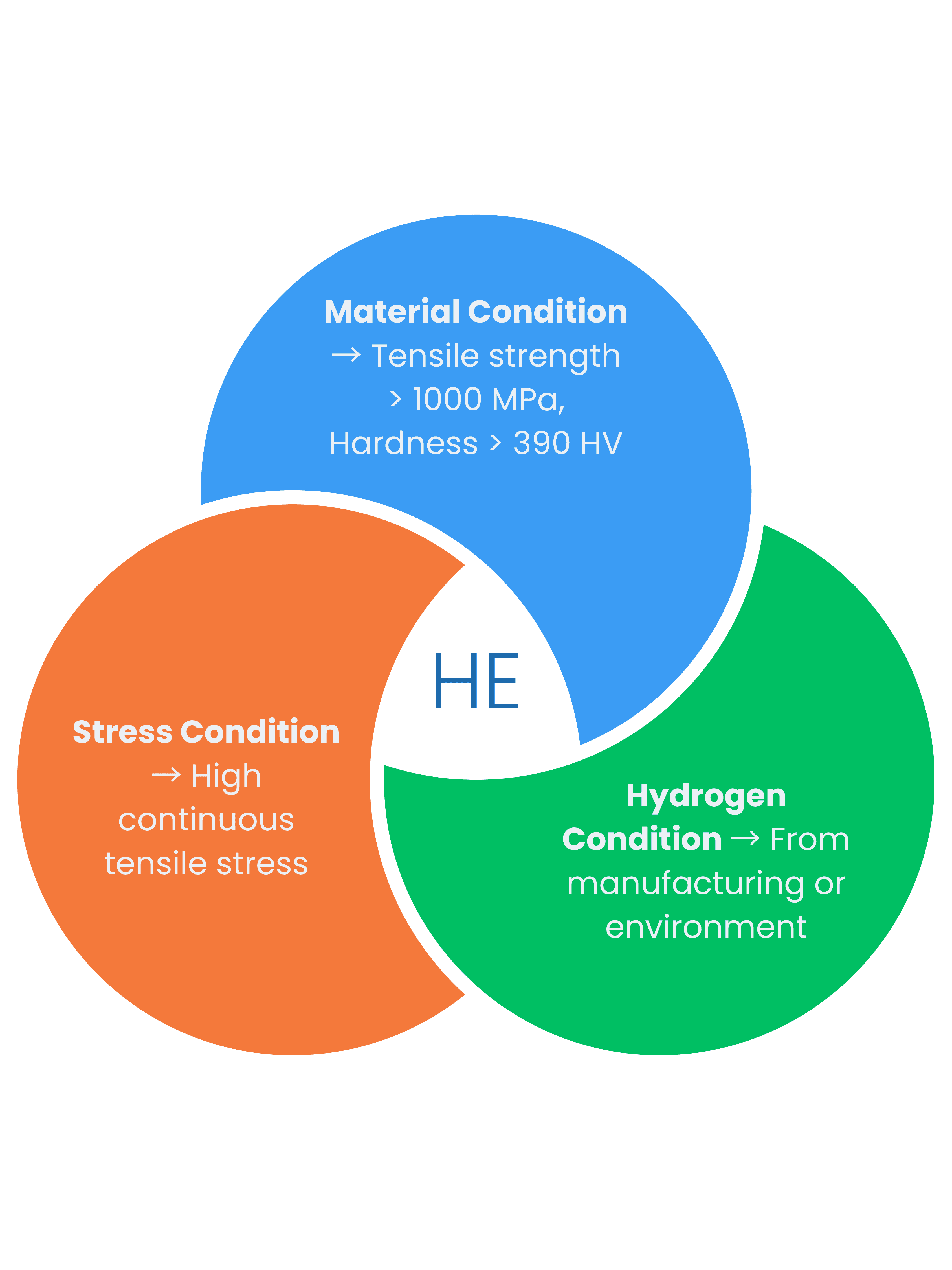
It doesn't need heat to move through a steel lattice the way creep needs a component near its melting point, hydrogen just diffuses interstitially between iron atoms at room temperature, driven purely by concentration and stress gradients. That's why embrittlement can happen in a bolt sitting quietly in a warehouse, not just one under load in service.
Once inside, hydrogen doesn't just spread evenly. It migrates toward the regions of highest triaxial stress: a notch root, a thread root, a crack tip, right under a bolt head, because those are the regions where the lattice is already stretched furthest apart and hydrogen atoms fit more smoothly. That migration is also why embrittlement is a delayed failure rather than an immediate one: hydrogen needs time to properly accumulate at the critical location before there's enough of it to matter. A part can pass every inspection at the point of installation and still fail hours, days, or weeks later, once enough hydrogen has diffused to the one spot that counts.
Two mechanisms are generally understood to drive the actual damage, and both are usually contributing to some degree:
- Hydrogen-enhanced decohesion (HEDE):
Hydrogen atoms concentrated at a grain boundary or crack tip weaken the atomic bonding directly, lowering the energy needed to pull the lattice apart along that plane. - Hydrogen-enhanced localised plasticity (HELP):
Hydrogen increases dislocation mobility in a narrow band around the crack tip, concentrating deformation into that band rather than spreading it through the material, which promotes highly localised, low-energy fracture.
This is also the real explanation for why higher strength steels are worse, not better, at handling hydrogen. A softer, more ductile steel can blunt a stress concentration by deforming around it, spreading the load and buying time. A hardened, high-strength microstructure has far less of that plastic reserve available - so hydrogen's bond-weakening effect translates almost directly into crack growth, rather than being absorbed by the material flexing around it. It's the same reason a 12.9 bolt is considered a materially different risk to a 10.9 bolt in a hydrogen-prone application, even though both are just steel: strength and ductility trade off against each other, and hydrogen exploits exactly the side of that trade-off a high-strength grade has given up.
Known Failures:
What Hydrogen Embrittlement Has Taught Structural Engineering
| CASE | What happened & what it taught us |
|---|---|
| San Francisco - Oakland Bay Bridge, 2013 | Back in March of 2013, engineers started tensioning 96 anchor rods on the new eastern span's seismic shear keys. Within days, 32 of them had already snapped. The reason came down to hydrogen embrittlement. The rods had been tightened harder than they could safely handle, and water had been sitting inside their steel casings the whole time. That gave hydrogen everything it needed, both the pressure and the source. Caltrans went on to test the roughly 2,200 remaining rods and bolts across the bridge. Anything that measured above the safe threshold got extra protection against corrosion, and the rest went through a full repair programme. It's still one of the most publicly documented hydrogen embrittlement cases out there, mostly because it happened on such a massive, high profile piece of infrastructure, tested out in the open for everyone to see. |
| Sour-service pipeline failures, 1950s–present | There's a standard that basically runs the entire sour oil and gas industry today, NACE MR0175/ISO 15156. It exists because of a run of bad failures back in the early 1950s, including a sour gas pipeline that failed in Alberta and a refinery explosion in Texas the year after that killed 35 people. In both cases, hydrogen sulfide in the process pushed hydrogen into the steel while it was under constant stress. That led to the same kind of failure every time: sudden, brittle, and with zero warning. The only difference was what triggered it, process chemistry instead of a plating bath. NACE MR0175 came out in 1975 to stop that exact thing from happening again, by limiting how hard the steel used in H2S environments could be. It's still one of the strictest material rules in oil and gas today. |
| Electroplated high-strength fasteners, ongoing | Grade 12.9 bolts and other really hard fasteners show up way more often than they should in hydrogen embrittlement failures. Almost every time, it traces back to acid pickling or zinc plating during manufacturing, not anything that happened once the part was in use. In one case, a batch of Grade 12.9 bolts started cracking days to weeks after they were installed. A bolt from the same batch that hadn't failed yet still had around 17 ppm of hydrogen in it, way above the roughly 3 ppm that's enough to trigger this kind of delayed cracking at that strength level. Aerospace and automotive industries have run into this too. Embrittled engine mounting bolts have actually caused engines to come apart mid service, which is why aerospace plating rules like AMS 2417 require bake out within an hour of plating. Unlike the two cases above, this one almost never makes headlines. It just quietly fails, one bolt or one batch at a time, whenever someone skips the bake out step or doesn't time it properly. |
How do you prevent it?
| Approach | Why it works |
|---|---|
| Use lower strength grades where possible (10.9 rather than 12.9 bolts) | Lower strength steels are far less susceptible to hydrogen-assisted cracking |
| Bake out hydrogen after plating or welding | Drives the absorbed hydrogen back out before it has the chance to weaken the lattice |
| Specify barrier coatings or alternative alloys | Reduces hydrogen exposure at the source |
Once a part is embrittled, there is no fixing it.
The only solution is replacement, which is why design stage decisions are the ones that really matter.
Catching Hydrogen Risk Before a Part Ever Sees Service
This is the one failure mode in this series where the real window to catch it is before service starts, not years into it.
Once a part is embrittled, there's no fixing it. So everything below is about catching the risk during fabrication, plating, or commissioning, before the part ever gets loaded in the field.
- Bake out verification to ASTM F519 confirms the bake out actually drove enough hydrogen back out, not just that a part sat in an oven for a set time.
- Delayed cracking holds keep high strength plated fasteners back for a set window after bake out, since a part can look fine right after plating and still crack later.
- Magnetic particle inspection (MPI) picks up surface cracking on high strength components before release.
- Ultrasonic testing catches subsurface cracking in heavier sections where MPI alone can't reach.
- For assets already in service, periodic MPI/UT on high strength bolted connections in sour service or plated environments is the practical fallback. Not because the mechanism builds up slowly like creep or corrosion, but because a fresh source of hydrogen can restart the same failure clock on an old part.
The output usually isn't a lab result confirming a part is fine. It's confirmation the fabrication process actually did what it was supposed to, because by the time hydrogen embrittlement shows up as a failure, the decision that caused it was already made weeks earlier.
Frequently Asked Questions
Can hydrogen embrittlement be reversed once it has happened?
No. By the time a part fails, the damage has already been done. Preventative measures have to happen before hydrogen gets absorbed, not after.
Why does hydrogen embrittlement mostly affect higher strength steel?
Higher strength steels are less able to absorb the local stress hydrogen creates, so they crack at lower loads than softer grades would.
Does electroplating cause hydrogen embrittlement?
Plating processes can introduce hydrogen into the surface, which is why baking parts afterwards is standard practice for higher strength fasteners.
Why does hydrogen embrittlement cause delayed failure rather than immediate failure?
Because hydrogen has to diffuse through the lattice to the region of highest stress before it does meaningful damage. That takes time, which is exactly why a part can pass inspection and initial loading, then fail hours, days, or weeks later with no new load applied.
Can unplated steel still suffer hydrogen embrittlement?
Yes. Welding, acid pickling, cathodic overprotection, and sour service (hydrogen sulfide exposure) can all introduce hydrogen without any plating process involved. Plating is the most common source in fabricated components, but it isn't the only one.
How long does bake-out actually take, and does it guarantee a safe part?
Typical bake-out windows run from around 2 to 24 hours at 190–230°C (375–450°F), depending on the fastener's strength and geometry. It reduces hydrogen content, but verification against a real threshold, not just time in the oven, is what actually confirms a part is safe — which is why witness specimen testing to ASTM F519 matters more than the bake schedule alone.
Is stainless steel at risk of hydrogen embrittlement?
Austenitic stainless steels are considerably more resistant than high-strength carbon or alloy steels, because their crystal structure accommodates hydrogen far better. Martensitic and precipitation-hardened stainless grades, used where higher strength is needed, can still be susceptible.
How is hydrogen embrittlement risk caught before a part goes into service?
Through bake-out verification to ASTM F519, delayed-cracking holds after plating, and magnetic particle or ultrasonic inspection before release — the critical window sits at fabrication, not years into an asset's service life.