Crane Assessment
Structural assessment of port side container crane with no historic drawings and a reliance on site measurement and point cloud data.
Crane Assessment:
No drawings, No problem! With an original manufacturer no longer in business and a crane worth saving, Subco reverse engineered this crane structure from point cloud data and delivered a complete assessment of a 26 year old asset over at PD Ports.
Portside Crane Structural Assessment: Point Cloud Reconstruction to BS EN 13001
No drawings? No problem. With an original manufacturer no longer in business and a crane worth saving, Subco reverse engineered a crane structure from point cloud data and delivered a complete assessment of the 26 year old asset over at PD Ports.
Point Cloud Analysis and Digital Reconstruction:
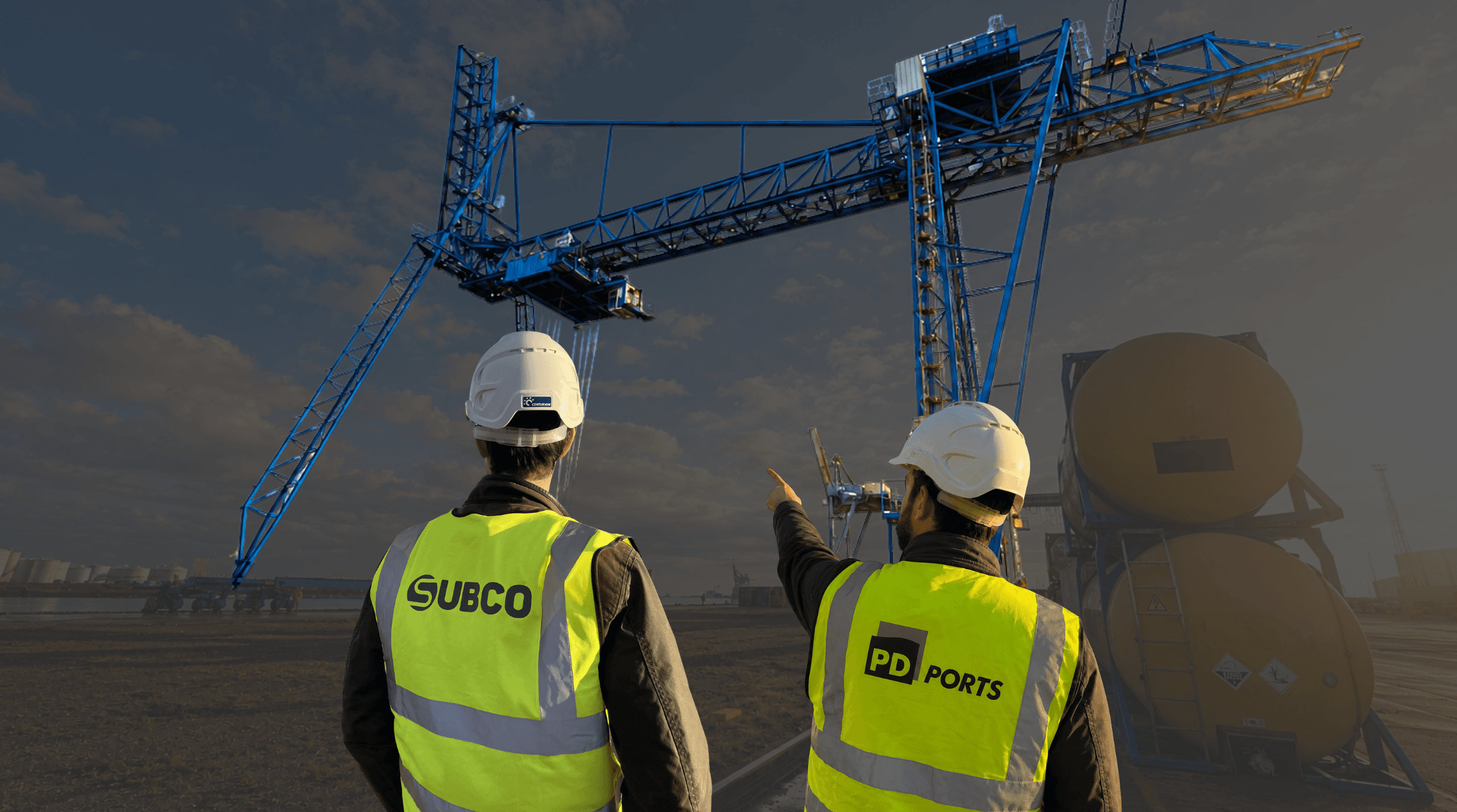
This 26 year old portside crane over at PD Ports needed a well-deserved full structural assessment. With the original manufacturer no longer in business, no historic drawings and limited information, our team built the structural model from scratch, by combining manual on site survey measurements and client-provided point cloud data analysis, delivering a complete assessment of their crane to BS EN 13001.
Why do we structurally assess a portside crane?
As cranes age, the effects of ageing tag along and original margins can no longer be taken for granted, so operators commission independent reviews to confirm their equipment is compliant with up to date operational standards.
Large capital assets in busy portside environments need real proof that they're still fit for operation, not just assumptions.
How did we approach the assessment?
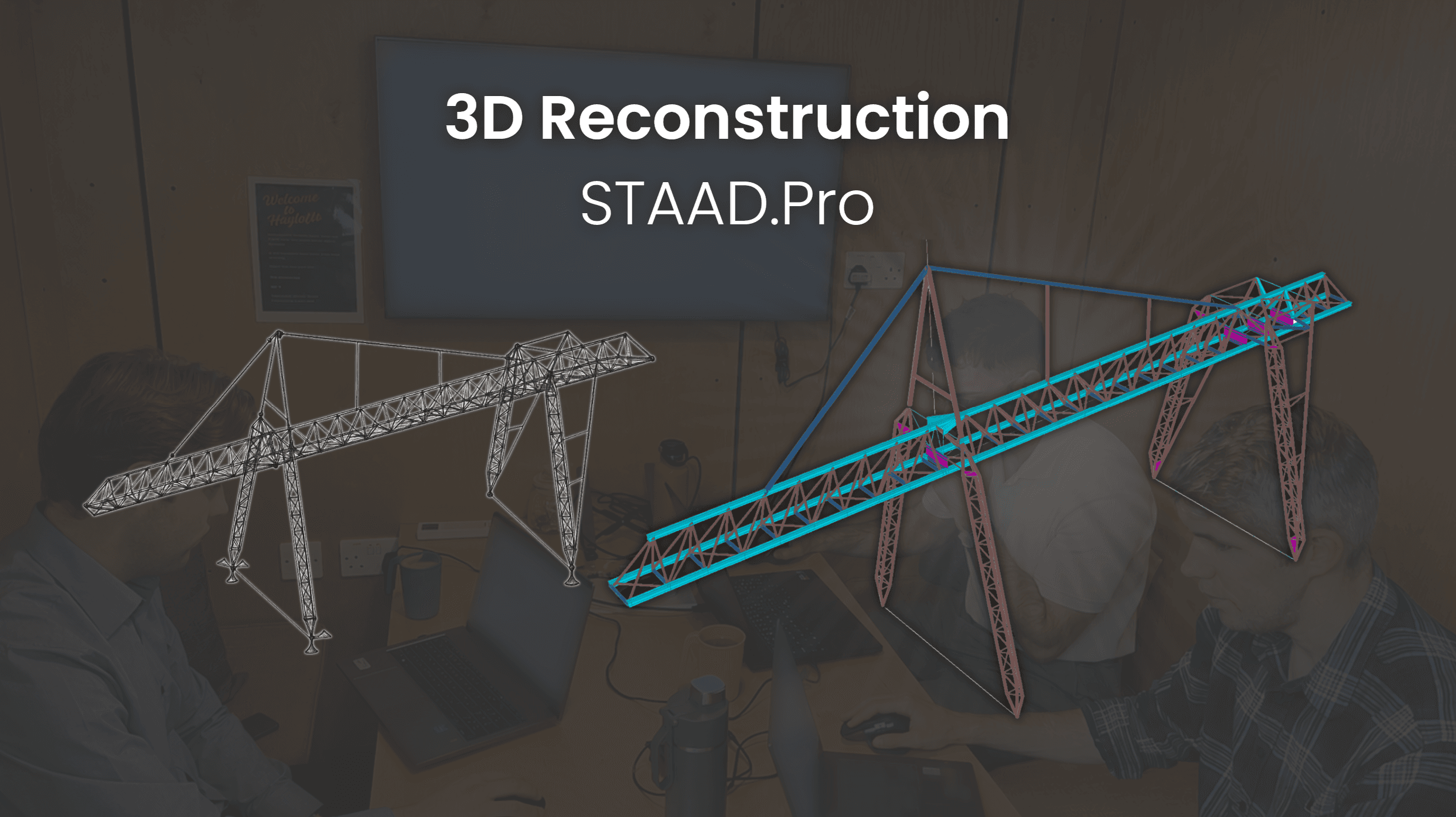
Our team combined three data sources to reconstruct the crane and build a fully verified model in STAAD.Pro
- On site Survey: Our engineers visited the site and conducted laser distance measurements and ultrasonic thickness gauging.
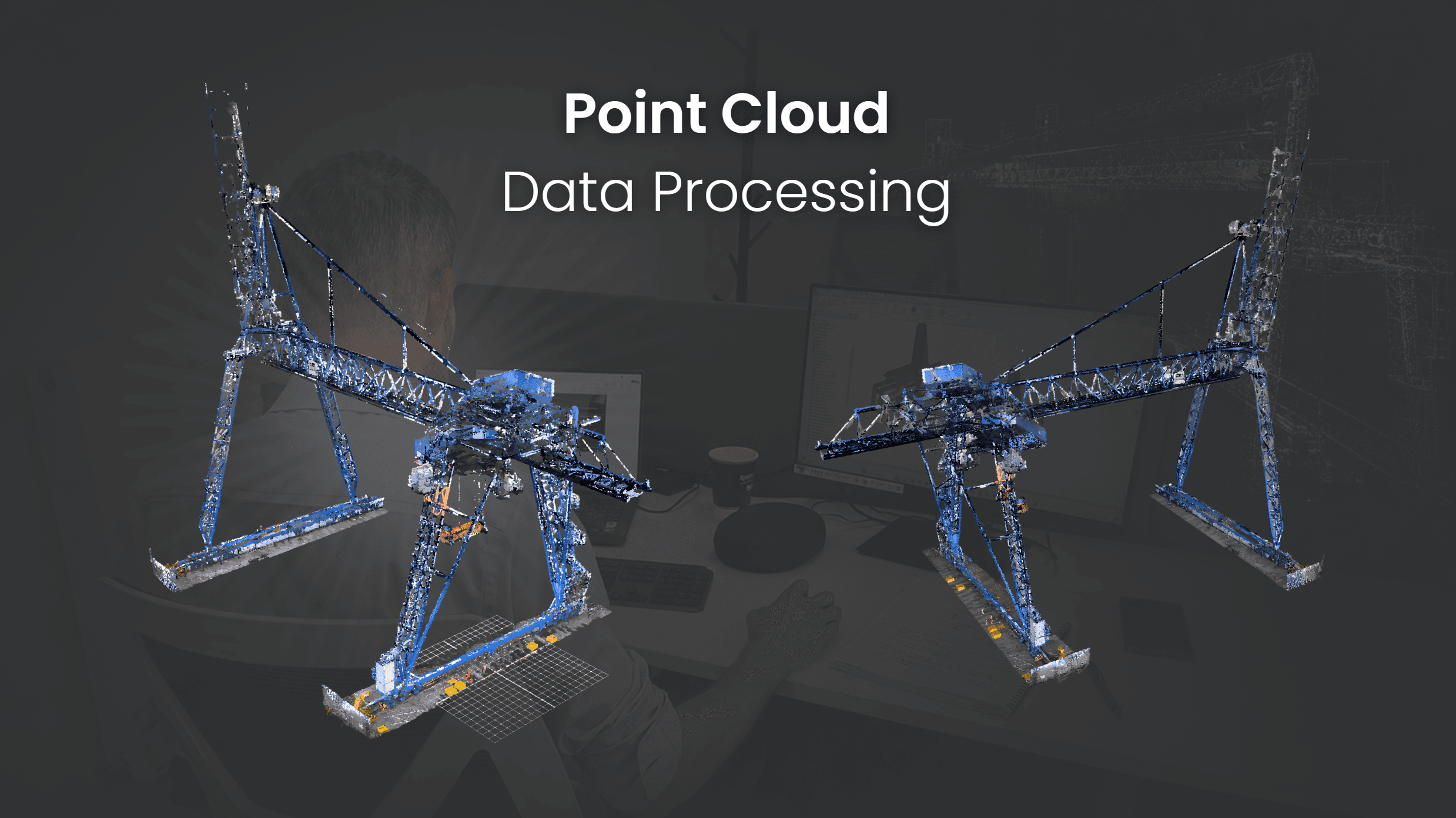
- Point cloud data: Point cloud data was provided and processed in Autodesk ReCap to reconstruct the crane's 3D geometry, supplementing and cross-referencing the on site measurements.
- Reference Documentation: A single surviving drawing and technical manual were used as reference where available.
What standards applied?
All our structural analysis was carried out to the European standard for crane design and structural integrity (BS EN 13001). Load cases were built from first principles across the full operating envelope, covering wind loading and operational conditions, so all results trace back to a recognised standard.
What were the results?
- New wind speed operating limits, backed by calculation
Rather than relying on estimated margins, we produced wind speed limits that are fully traceable to the European standard, giving the client a solid confidence in operation - Critical structural members identified
Our work identified which members carry the greatest structural significance with an evidence based plan for crack propagation monitoring, rather than a broad and unfocused approach.
Starting with just some fragmented documents, we left PD Ports with an managed asset and a clear plan for its future.
Sector:
Frequently Asked Questions
Can you assess our equipment if we've lost the original drawings and calculations?
Yes. This is a big part of what we do. When the paperwork is missing, we build the structural model from the asset itself rather than from documents that might be out of date anyway. That means measuring it on site, capturing wall thickness and section sizes, and scanning it in 3D. The assessment ends up grounded in what's actually there today.
What if the company that made our equipment no longer exists?
That's a common situation and it doesn't hold things up. We don't need the original manufacturer to sign anything off. We reconstruct the engineering baseline ourselves from survey and scan data, then assess it against whatever standard currently applies. You come away with a full record that belongs to you, with no dependency on a firm that may have closed years ago.
How do you actually prove old equipment is still safe to use?
We build a verified model of the structure and run it through the load cases it sees in real operation, right across its working range, to the relevant standard. For cranes that's BS EN 13001. Instead of assuming it's probably fine, you get calculated operating limits you can point to, plus a heads up on any members that need watching more closely.
What is point cloud data and why does it matter here?
A point cloud is basically a dense 3D scan of your equipment, captured by laser. We process it to rebuild accurate geometry and check it against our hand measurements. It's particularly useful on older assets, where drawings have often gone missing, or where the equipment has been modified over the years and no longer matches whatever paperwork does survive.
What do you need from us, and how long does it take?
Not much to get started. Really we just need access to the equipment. If you happen to have anything, an old drawing, a manual, some existing scan data, that's helpful and we'll use it, though our own survey measurements always take priority. Timescales depend on how big and complex the structure is. The fastest way to get a real answer is a quick call about your specific asset.
Why does a crane need a new wind speed operating limit as it ages?
Original wind limits are calculated against as designed geometry and material condition. As a structure ages, those assumptions can no longer be taken for granted. Recalculating limits against the crane's actual current condition and not its original spec is what makes the new figures genuinely reliable.
What's the difference between a crane inspection and a full structural assessment?
A routine inspection typically checks visible condition and operational function. A structural assessment goes further by rebuilding the geometry, running load cases, and calculating whether the structure itself still meets current standards. It's the difference between checking something looks fine and proving it actually is.