Part 1 of 4 in Building Subco’s operating platform
Contents of this series (4 parts)
- 1.Why we're rebuilding our operating platform (and what two years of an MVP taught us) (you are here)
- 2.The method: building robust software as non-coders (Coming soon)
- 3.Redefining how engineering projects are delivered (Coming soon)
- 4.Putting AI in its place (Coming soon)
Why we're rebuilding our operating platform (and what two years of an MVP taught us)
I've been seeing a lot of software built in a 'matter of days' recently, suggesting that the price of software development is trending to zero.
It really isn't, though. I'm not saying that what people are building isn't right for them or their business, but to suggest that developing software reduces to writing code quickly is a little short sighted. The code writing is the part that's trending to zero. The auditing, testing and decision making that sit around it still take time, and some of that testing still needs a person (AI can check how many clicks it takes to perform a function, but it can't yet tell you that a function fails when someone tries to use it the way that feels natural).
This is the first in a series of posts about how we've built, and are still building, our own operating platform at Subco Engineering. We're not software developers. We're engineers who know exactly what we need our platform to do, and over the past two years we've learnt a great deal about how non-coders can build something robust and valuable (rather than something that's simply considered AI slop).
Where it started
When we started Subco Engineering, we asked a basic question: if you could build your own design house from scratch, what would it look like?
That naturally extended to the systems we'd used at our previous companies (liked and loathed). Anyone who has worked in an engineering business will know the feeling of using a platform that was clearly designed around someone else's way of working, and all the workarounds that build up around it. Our challenge was to keep questioning the way things are currently done, and to change what we could.
The MVP
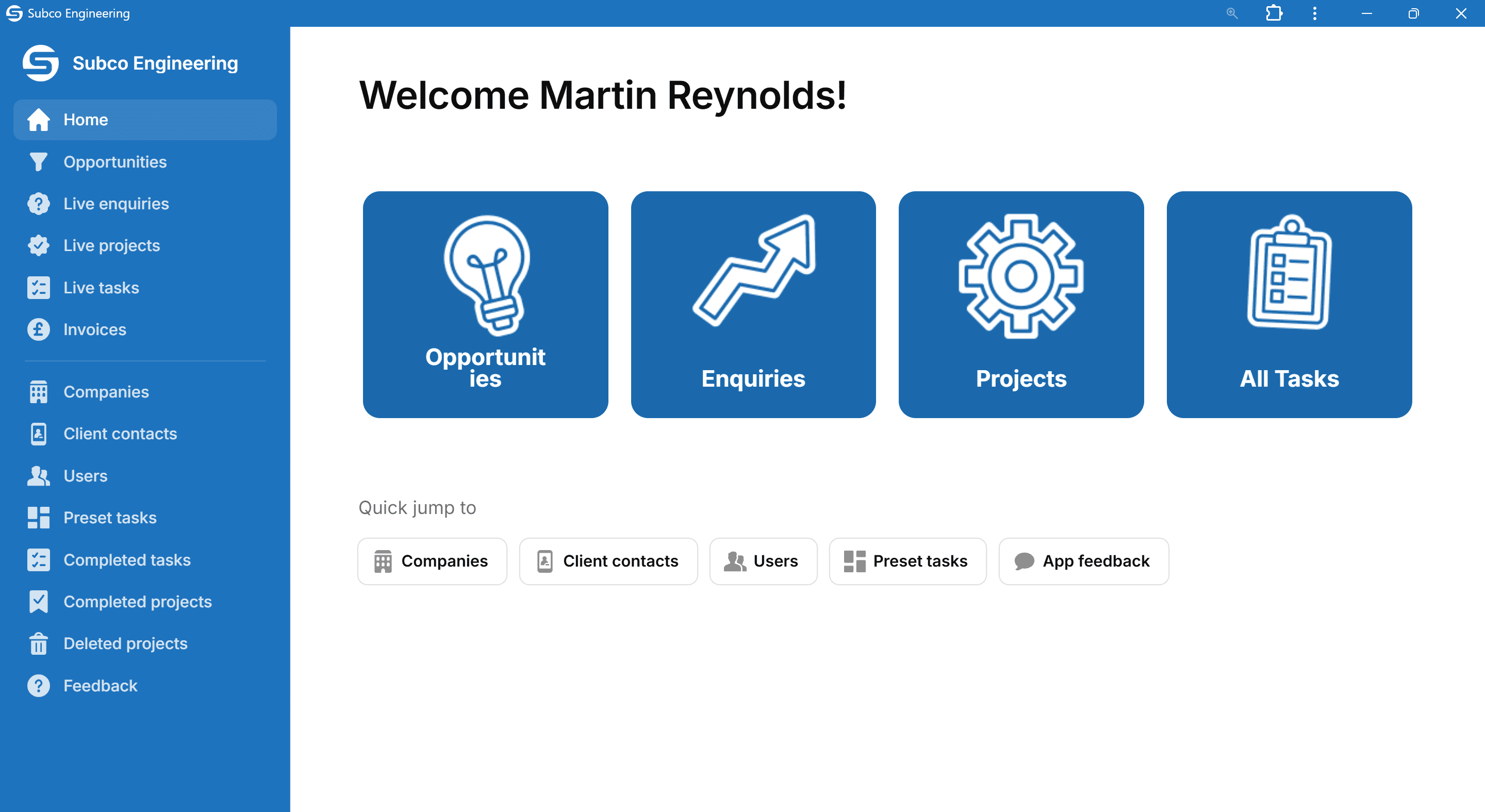
That single question led us to build an MVP in GlideApps. In the beginning it was nothing more than a glorified CRM, used to track leads and every part of the sales funnel through to project completion. We engaged a third party developer who specialised in this low code (drag and drop) style of build, and through a few workshops they built up the skeleton of what would become our functional system architecture.
It was always our intention to build the platform this way, and we already had a good idea of the architecture we had in mind. In fairness, that core hasn't changed.
We still use the MVP to this day. It has been the backbone of the business: it allows us to respond quickly to our clients' requests and assign tasks to our engineers, and all of our projects run through it. An MVP was never meant to be perfect, though; it was meant to teach us something, and it did.
What we're keeping: the workflows that took the admin away
The parts of the MVP that proved their worth weren't even engineering related. They were the workflows that saved our engineers from admin.
For our ISO 9001 alignment, every project email has to be saved in the right place. Before the MVP, that meant an engineer creating a project folder in SharePoint, creating a matching email folder in Outlook, manually saving every relevant email into that Outlook folder, and then repeating the whole thing to make sure there was a copy in the SharePoint project folder too.
We built workflows that create the project folders automatically (and we go through a lot of them). So long as the engineer copies in the project email address when sending a project specific email, it gets renamed (timestamped) and copied into the correct folder in both Outlook and SharePoint.
We now have over 500 projects, each with 20+ emails. That's more than 10,000 emails filed automatically, each saving a few minutes, before you even count the folder setups. More than that, though, it removes the friction of storing. It only takes one slipped communication for the whole thing to fall down, so this makes sure nothing is lost, and the engineer doesn't have to repeatedly context switch. Our ISO 9001 process is followed, and if an engineer is away, their jobs can be transferred, because the whole project dialogue is there for every associated engineer to see.
What we're refining: the engineering portal
Our engineering portal didn't work as intended. Its purpose was to give engineers an area with only the context they need to do a particular job. The problem was that it sat separately, alongside the main platform, and because both things could be done in the same place, our internal engineers weren't using it as often as we'd like.
As soon as something becomes a chore to use as opposed to adding value, it gets dropped, and it only takes one missed entry for the rest of the data to become useless. So rather than a separate portal, we're now building role based views within the same platform, so each engineer is shown the view that matches their role and access.
What we're dropping: the calendar and the noise
Weirdly enough, the calendar view didn't work for the engineers. We placed their tasks within a calendar in the platform, but because they already use calendar apps elsewhere, this one was ignored.
The bigger one for us was email notifications for basic updates. We should only be notified of the main changes in the platform that demand our attention; otherwise it becomes a road with too many signs, and there's too much noise to properly focus on the things that matter. Going forward, we'll have selective notifications, so engineers can choose what they're notified about and how (be it push, email or through Teams).
The biggest lesson: you are a very small sample
You may have the best idea curated in your head of how the platform should be built, based on how you interact with software. However, a single you is a very small sample range.
Over the two years we gathered feedback within the MVP, by building a feedback section into the platform and making that side of it as frictionless as possible. What you quickly realise is that not everyone interacts with software like you do, and the best ideas come from a diverse range of experiences, experience levels and opinions. Looking back, that explains every lesson above: the calendar, the portal and the notifications all made sense to whoever designed them, and the wider team showed us what actually worked.
Why rebuild now?
Not long ago, writing the code was the most expensive and lengthy part of any software project. That's why so much time went into writing incredibly detailed specifications up front (what the software had to do and how it was structured), and why building our MVP in a low code tool made so much sense at the time. If you got the spec wrong, you were cascading cost into the most expensive part of the project.
That simply isn't the case anymore. The code writing side of things is now relatively cheap, cheap enough that we can afford to build something to test an idea first, rather than describe it in a document and hope we've got it right. That flips the way we can (and should) think about building software. The trouble is, nobody has really developed a robust process for working this way yet.
So we're rebuilding our platform from the ground up. We're keeping the core architecture that has served us well, keeping what worked, refining what didn't, dropping what nobody used, and putting a process around it that we're comfortable with.
Doesn't that just mean vibe coding?
There's a lot of scaremongering in the industry about vibe coding, and most of it is built on some fairly obvious horror stories: software that has split at the seams, or was built on a foundation of sand. Those stories are real, but they aren't the whole picture.
I speak to a lot of software developers, and I don't know a single one who doesn't use AI to write at least part of their code. In fact, some vibe coded projects are built with better software fundamentals than ones written with no AI at all, especially when the AI is in the right hands (often a developer's). If anything, the frustration I hear most is aimed at colleagues who refuse to use it.
AI development doesn't have to mean AI slop. So long as you have a robust process, and you're honest about your own limitations (and your team's), you can shape that process to make the most of your skills while staying wary of where you're weakest. For us, that meant being clear that we're not software developers, and bringing in the right people at the right points.
What this series will cover
Over the coming weeks I'll be sharing this build process, in the hope that other engineers and non-coders can build something robust too. It will cover:
- What the MVP taught us
- How to use AI within a traditional software development process to properly stage, test and audit the development
- How to set up a fast, automatic feedback loop, so issues are fixed quickly (and nobody has to live through the same bug twice)
- When to bring in the experts for the key architectural decisions to ensure the foundations are solid (very important)
- How to keep the platform secure, and the tech stack to do this
- Why we decided to reimagine how engineering projects are scoped and delivered
- How to build something that is AI native (accessible by agents)
Follow along if this interests you; I'll be sharing everything we've done and the lessons learned along the way.
Category:
Blog
Written by:
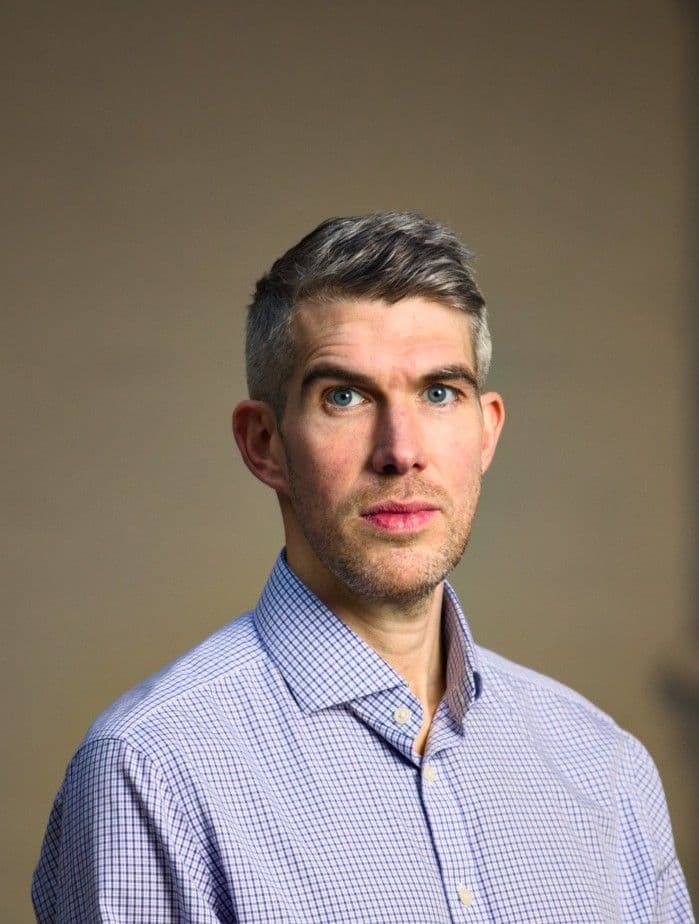
Martin Reynolds